


Quick info
limited, 100 copies | Made in Germany | ceramic | handmade and -glazed | gold decoration | size 14 x 24 x 9 cm (h/w/d)
Detailed description
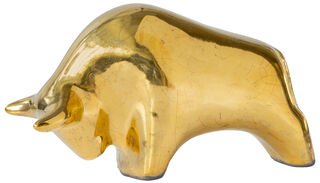
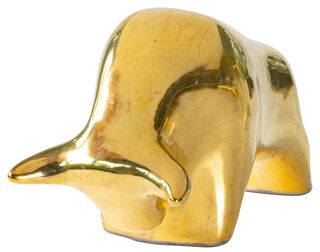
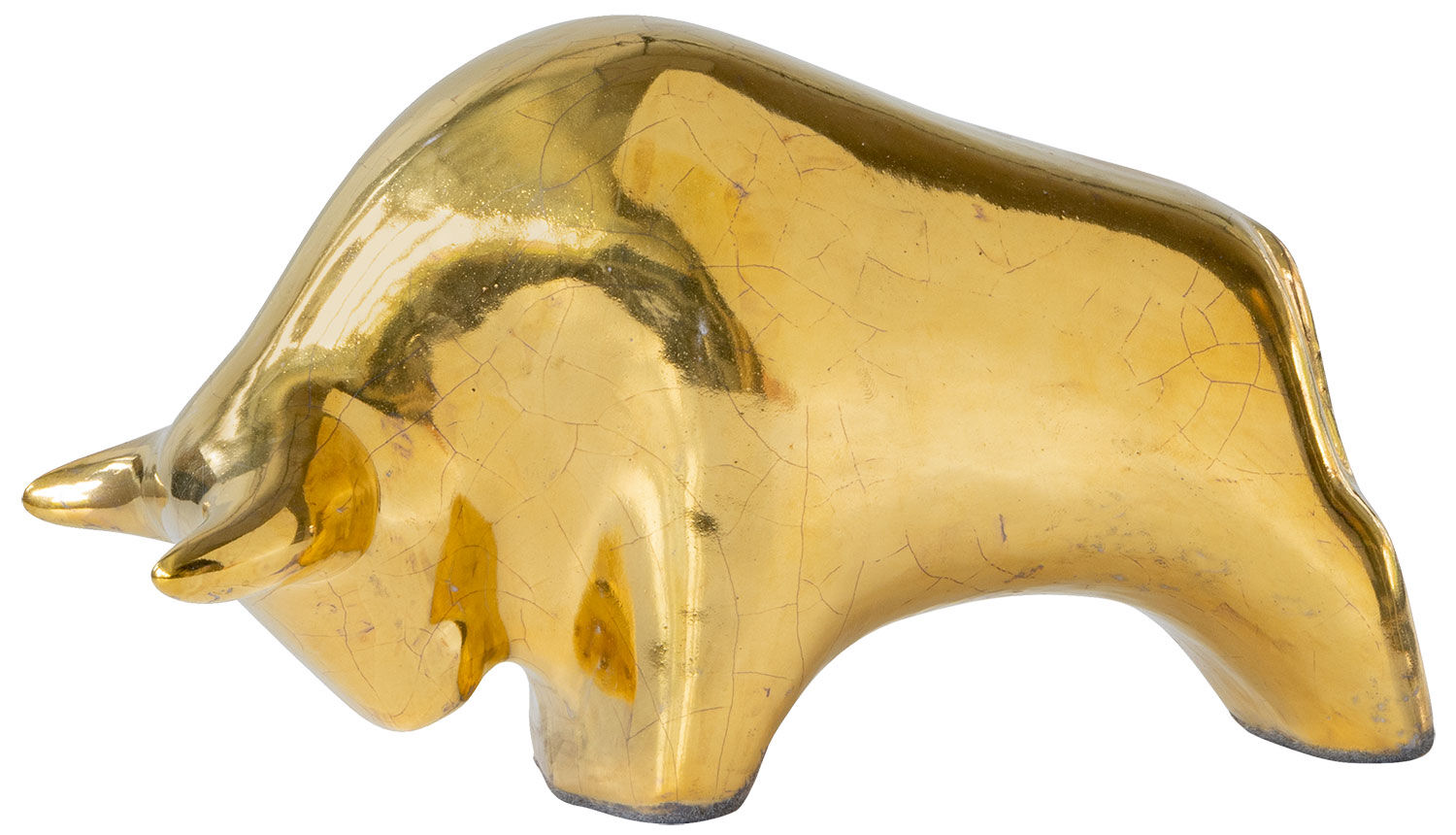
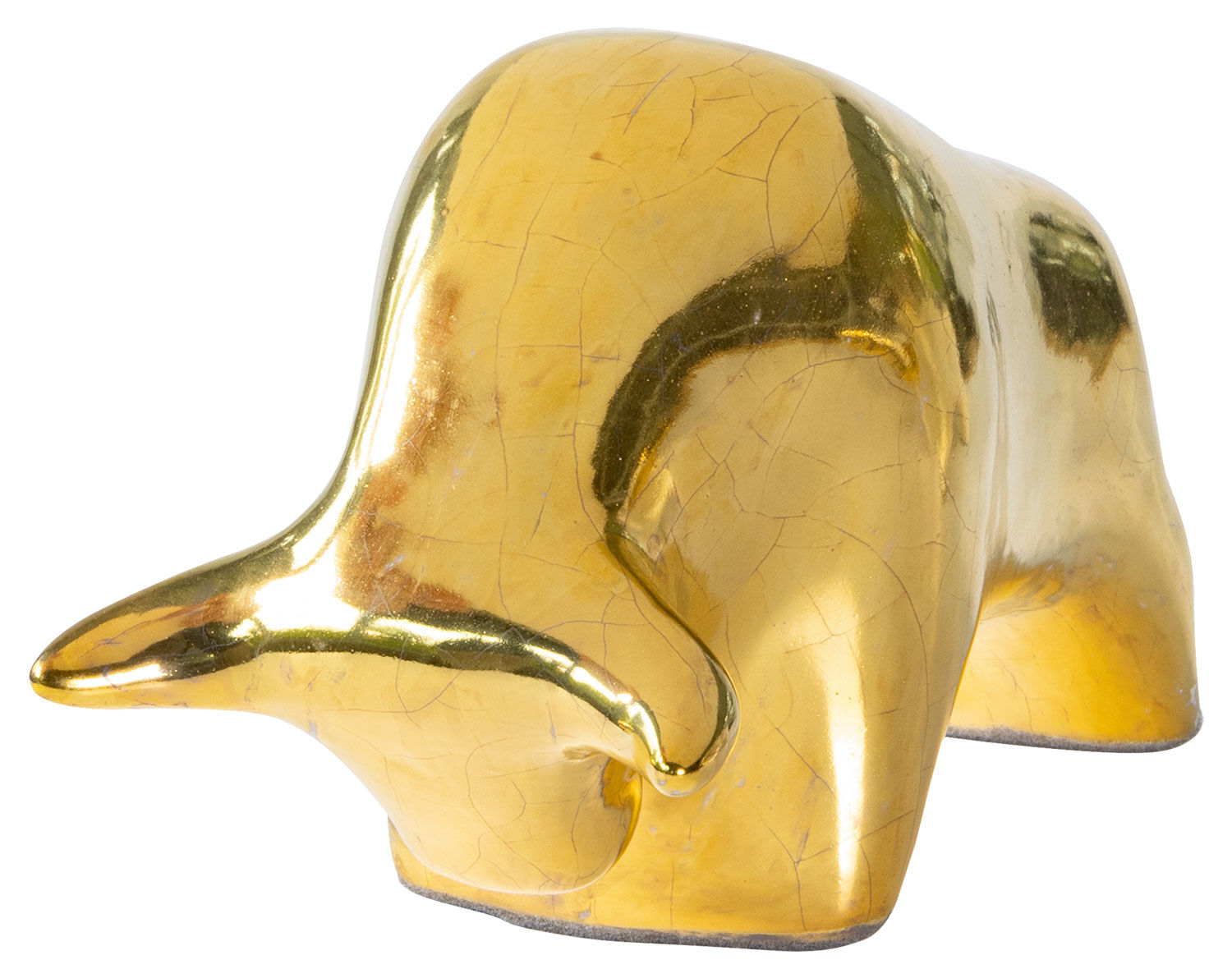
Ceramic figurine "Bull", golden version
This bull is not a decoration, it is a statement. Its shape is clear, present and unmistakable. Limited edition of 100 copies. Each sculpture is made exclusively in Germany from the famous Westerwald clay, glazed and then fired at 1040°C. Finished with 12% bright gold. Size 14 x 24 x 9 cm (h/w/d). Golden version.
Producer: ars mundi Edition Max Büchner GmbH, Bödekerstraße 13, 30161 Hanover, Germany, [email protected]
Term for an art object (sculpture, installation) that, according to the artist’s intention, is produced in multiple copies within a limited and numbered edition.
Multiples enable the "democratization" of art by making the work accessible and affordable for a wider audience.
Ceramic product made of kaolin, quartz, and feldspar.
Porcelain is formed by turning or pressing, and figurative objects are cast. Complex objects have to be cast in separated steps and sections, and then "assembled". After the moulding, the pieces are dried and undergo an initial firing at about 900°C. Next, the glaze will be applied and fired at temperatures between 1,240 °C and 1,445 °C. In renowned manufactories, the porcelain is painted by hand, with each colour being fired individually under strict temperature tolerances.
Porcelain was invented in China and became widespread in Europe from the 16th century onwards. The first European porcelain factory was founded in Meissen, Germany in 1710.
Other famous European porcelain factories include Fürstenberg, Höchst, Schwarzburger Werkstätten, Lladró, Nymphenburg, KPM, Augarten, Sèvres, Limoges, Royal Copenhagen, Worcester. Each factories label their products with their personal porcelain stamps to indicate their origin.
A plastic work of sculptural art made of wood, stone, ivory, bronze or other metals.
While sculptures made of wood, ivory, or stone are carved directly from the material block, in bronze casting, a working model is prepared at first. Usually, it is made of clay or other easily mouldable materials.
The prime time of sculpture after the Greek and Roman antiquity was the Renaissance. Impressionism gave a new impulse to the sculptural arts. Contemporary artists such as Jorg Immendorf, Andora, and Markus Lupertz also enriched sculptures with outstanding works.