
Quick info
handmade | ceramic + wood | size 48 x 21 cm (h/w) | weight approx. 1.5 kg
Detailed description
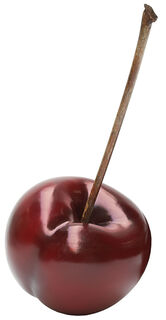
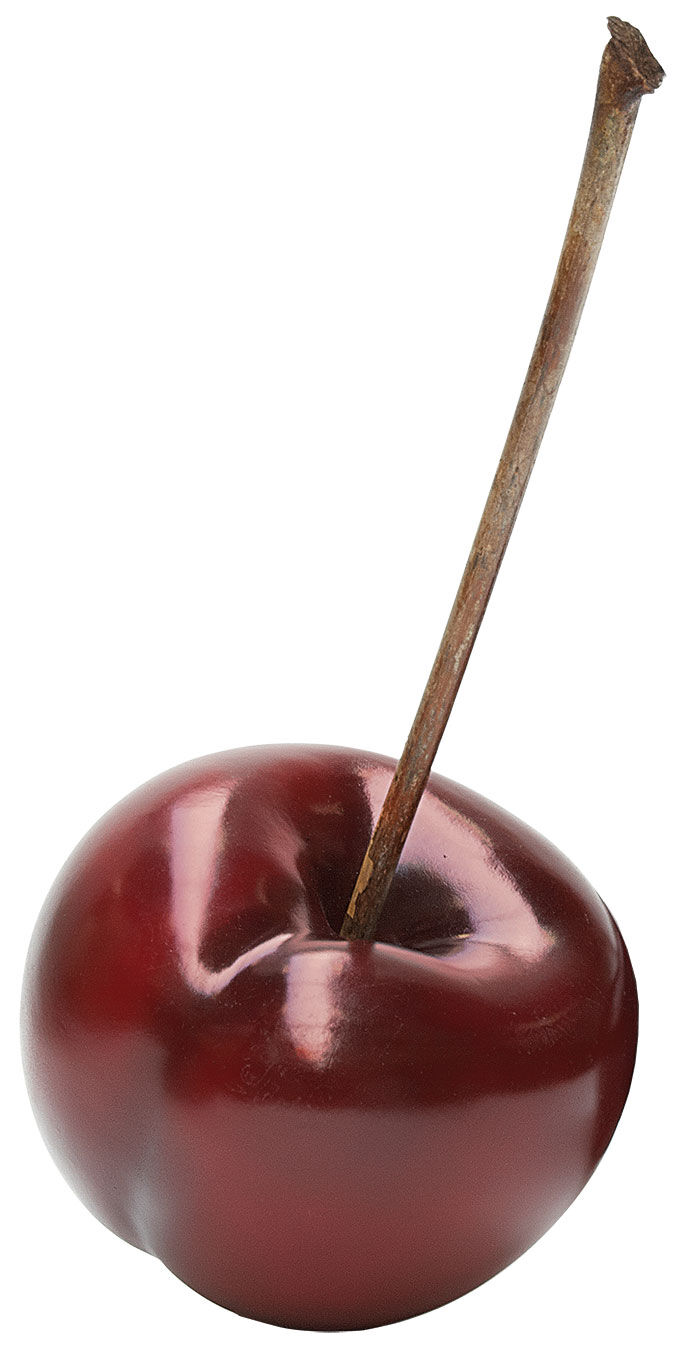
Ceramic object "Cherry Ginja"
Fruit harvest made of finest ceramics from the north of Brazil.
The fruits by Brazilian designer Selma Calheira not only demonstrate the natural beauty of apples, pears and cherries, they are also quite "rich in vitamins". Not in the chemical sense because Calheira's fruits are made of fine ceramics. But certainly in the figurative sense: they are created in Bahia as part of a social project initiated by the artist that supports the disadvantaged population in the northern rural areas of Brazil and trains talented artisans to become professional ceramists. With the ceramic objects they make according to Calheira's designs, they have the opportunity to provide for the necessities of life.
Their ceramic fruits "according to nature" can be draped individually, in groups, in a bowl or as a sculpture and are elaborately handmade. The brown stems are made of wood and contrast beautifully with the ceramics. Each piece is unique. Only for indoor use.
Ceramic object "Cherry Ginja": size 48 x 21 cm (h/w). Weight approx. 1.5 kg.
Producer: ars mundi Edition Max Büchner GmbH, Bödekerstraße 13, 30161 Hanover, Germany, [email protected]
This object is part of the following sets
Customer reviews
Vielen Dank für die wunderschöne Kirsche. Alles hat perfekt geklappt, der Versand erfolgte sehr zügig und die zerbrechliche Ware war sehr gut verpackt.
Objekt ist sehr gut gearbeitet. Verpackung und Service spitze
Exzellent
Einfach genial, jeder von unseren Besuchern fragt, wo die Objekte her sind!
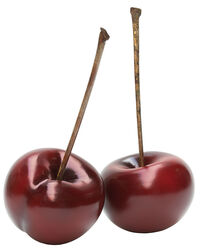
sehr schönes Kunstobjekt. Beide Kirschen - Lisa und Ginja - ergänzen sich optimal
Wunderschöne Kirschen, wirken total 'echt' und sind ein toller Blickfang.
PERFEKT
Contemporary art created from objects that are not normally considered materials from which art is made.
Object art was a means of expression of Cubism, Dadaism and Surrealism, and over time, it has developed various representational techniques up to the present day.
Ceramic product made of kaolin, quartz, and feldspar.
Porcelain is formed by turning or pressing, and figurative objects are cast. Complex objects have to be cast in separated steps and sections, and then "assembled". After the moulding, the pieces are dried and undergo an initial firing at about 900°C. Next, the glaze will be applied and fired at temperatures between 1,240 °C and 1,445 °C. In renowned manufactories, the porcelain is painted by hand, with each colour being fired individually under strict temperature tolerances.
Porcelain was invented in China and became widespread in Europe from the 16th century onwards. The first European porcelain factory was founded in Meissen, Germany in 1710.
Other famous European porcelain factories include Fürstenberg, Höchst, Schwarzburger Werkstätten, Lladró, Nymphenburg, KPM, Augarten, Sèvres, Limoges, Royal Copenhagen, Worcester. Each factories label their products with their personal porcelain stamps to indicate their origin.