
Picture "Girl Embroidering" (1923/1985)
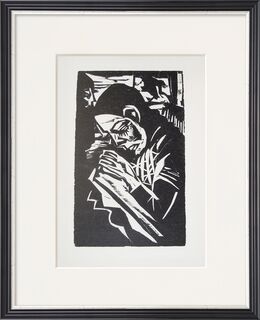
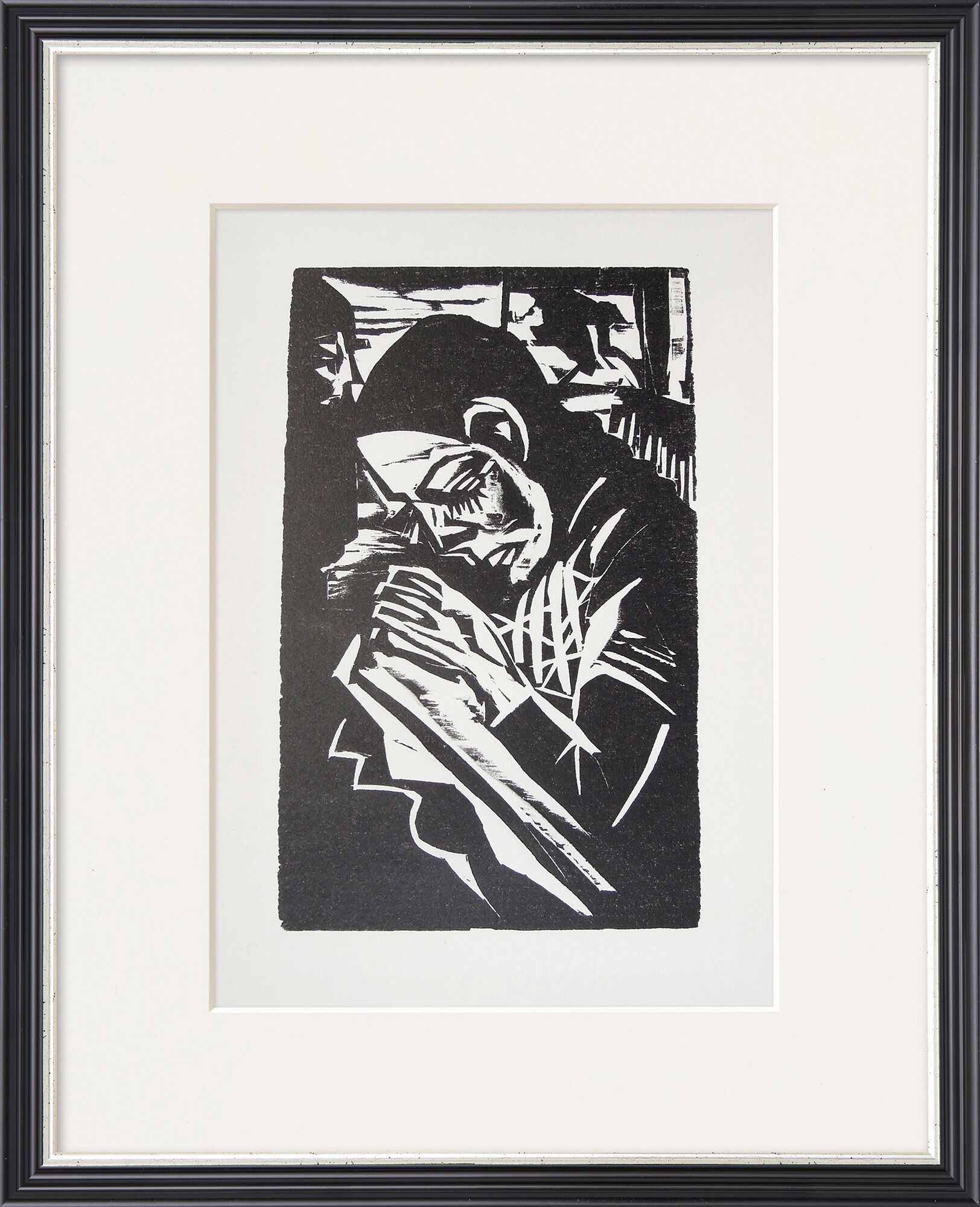


Picture "Girl Embroidering" (1923/1985)
Quick info
limited, 100 copies | numbered | stamped | woodcut on paper | framed | size 44 x 35 cm
Detailed description
Picture "Girl Embroidering" (1923/1985)
Woodcut, 1923/1985. 1985 restrike from the original woodblock. Edition: 100 copies (offered here) + a very small number of E.A. copies on paper. Stamped by the publisher and numbered on the back. Published by the Kirchner Museum Davos. The woodblock was found in 1984 during an inheritance of the sculptor J.J. Wilhelm Schwerzmann, a friend of Kirchner, and was issued by the Kirchner Museum Davos with the consent of the Kirchner estate. Catalogue raisonné Gercken 1370, not in Dube. Motif size 20 x 12.6 cm, sheet size 29.5 x 21 cm. Framed size 44 x 35 cm as shown.
Producer: ars mundi Edition Max Büchner GmbH, Bödekerstraße 13, 30161 Hanover, Germany, [email protected]
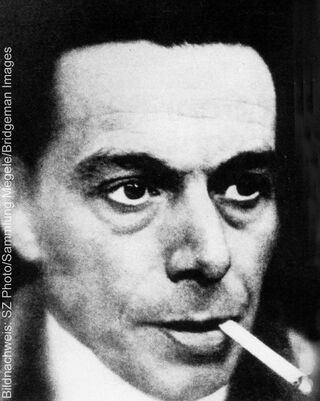
About Ernst Ludwig Kirchner
1880-1938
Ernst Ludwig Kirchner was one of the founders of the artist‘s group "Die Brücke" (The Bridge) and one of the most important representatives of Expressionism. His oeuvre includes around 30,000 paintings, drawings, sketches and sculptures.
When a person's fear becomes too great and the purpose of life is not only threatened but also taken away, it is often only seen one way out: self-chosen death. This is what happened to Ernst Ludwig Kirchner, who took his own life by gunshot on a mountain pasture above Davos on 15 June 1938. Before that, however, he destroyed his woodblocks and a large number of his sculptures out of fear of the invasion of German troops.
Kirchner was born in Aschaffenburg, Germany, on 6 May 1880 but moved to Switzerland on 13 October 1918. After several stays in sanatoriums because of severe depression and drug abuse in Germany, his friends admitted him to the doctor Ludwig Spengler in Davos.
The First World War, for which Kirchner volunteered for military service, triggered his anxiety. His "Self-Portrait as a Soldier" of 1915 was a testimony to his inner state of mind.
Kirchner was a painter who always reproduced his immediate surroundings in oil, woodcut, etching and also sculpture. Therefore, his work is structured through several phases. As a co-founder of the artist‘s group "Die Brücke" in 1905, he represented a strongly colourful and expressive style of painting, the themes of which are mainly the so-called "quarter-hour nudes" as well as city scenes of Dresden and Berlin. With the "discovery" of open-air painting, the nudes moved from the studio to the open air, in 1904 to the Moritzburg lakes, and from 1908 to Fehmarn.
After the ending of the group "Die Brücke" in 1913, Kirchner chose Berlin street scenes as a new motif, depicting the milieu of the cocottes with hard strokes and black outlines. For a long time, a critical view of the fringe groups of society took over from his paradisiacal landscape painting.
It was not until he returned to Switzerland that he found inner peace and equilibrium. His Swiss paintings of the 1920s are captivating for their colour harmonies and flowing forms.
In addition to painting and graphic art, the artist, who lived in an alpine hut, also devoted himself to sculpture. However, the National Socialists' seizure of power and the defamation of 639 of his works as "degenerate art" once again fuelled the fears of the sensitive artist and led him to his tragedy.
The field of graphic arts, that includes artistic representations, which are reproduced by various printing techniques.
Printmaking techniques include woodcuts, copperplate engraving, etching, lithography, serigraphy, among others.
Depiction of typical scenes from daily life in painting, with distinctions between rural, bourgeois, and courtly genres.
The genre reached its peak and immense popularity in Dutch paintings of the 17th century. In the 18th century, especially in France, the courtly and gallant painting became prominent, while in Germany, a more bourgeois character developed.