
Sculpture "Bull Philo", reduction in bronze New
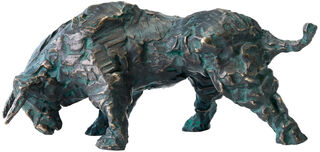
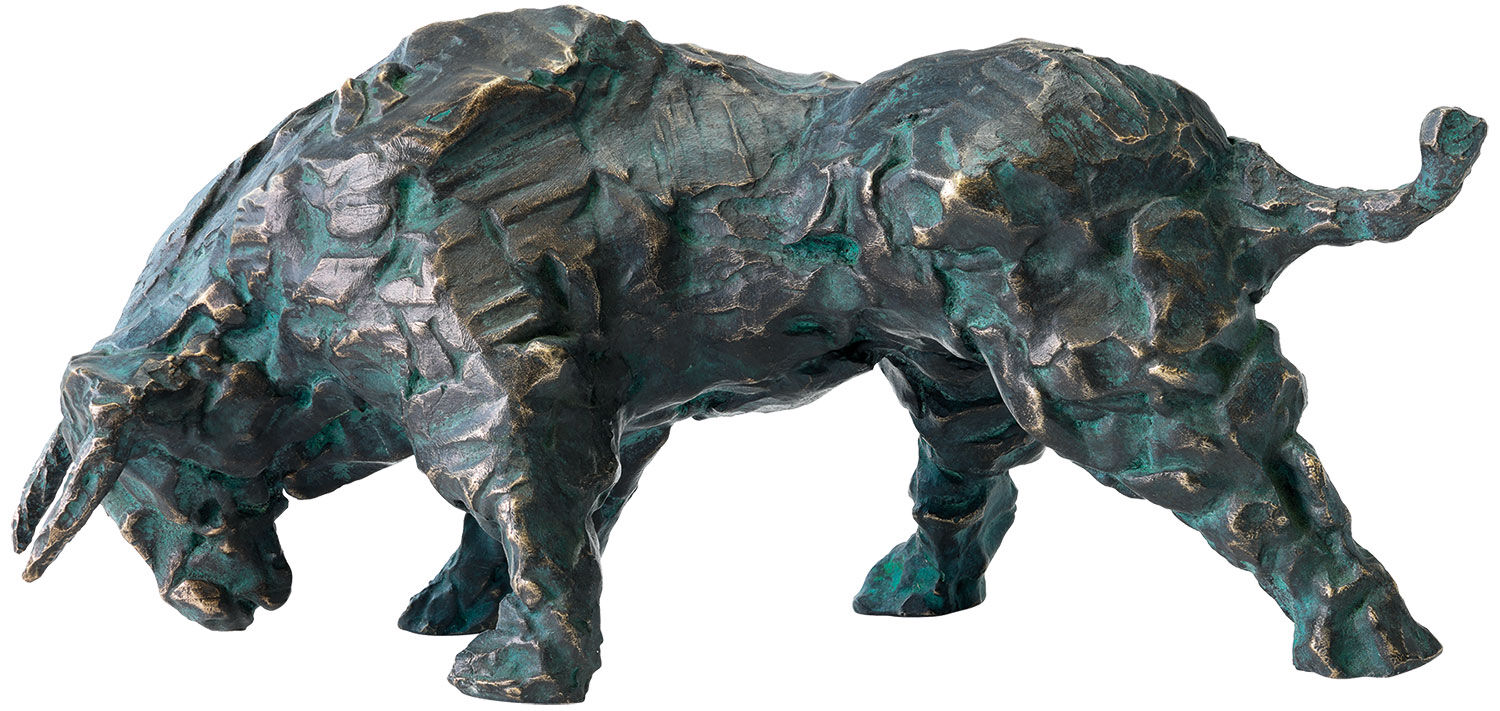
Sculpture "Bull Philo", reduction in bronze New
Quick info
ars mundi Exclusive Edition | limited, 199 copies | numbered | signed | hallmarked | certificate | bronze | chiselled | polished | patinated | reduction | size 12.5 x 29 x 13 cm (h/w/d) | weight approx. 3 kg
Detailed description
Sculpture "Bull Philo", reduction in bronze
The original life-size bronze sculpture is situated in the park of the Hofgalerie in Graz, Austria.
Bronze sculpture, cast using the Lost-Wax-Process, hand-chiselled, polished and patinated. Moulded directly from the original and reduced in size (reduction). Limited edition of 199 copies, numbered, signed and hallmarked with the foundry and ars mundi stamp. With numbered certificate of authenticity and limitation. Size 12.5 x 29 x 13 cm (h/w/d). Weight approx. 3 kg. ars mundi Exclusive Edition.
Producer: ars mundi Edition Max Büchner GmbH, Bödekerstraße 13, 30161 Hanover, Germany, [email protected]
About Gerhard Almbauer
The Austrian artist Gerhard Almbauer (born in 1957 in Graz), in addition to his oil and acrylic painting, is once again devoting greater attention to working with bronze and sculpture after a lengthy break. Almbauer has always sought to transfer his artistic ideas into three dimensions as well. This initially led to sculptures made of clay, plaster and wax. Over time, these smaller works developed into life-size bronze sculptures. One example is the bull "Philo", which has found its place in the park of the Hofgalerie in Graz. Numerous other figurative and abstract sculptures followed.
Gerhard Almbauer is represented with his works in numerous European galleries. In addition, he presented his art at international art fairs, including in New York and Peking, as well as at the SCOPE Art Show in Basel.
An alloy of copper with other metals (especially with tin) used since ancient times. It is an ideal metal for high-quality artistic castings, capable of enduring for millennia.
When casting bronze, the artist usually applies the lost-wax technique which is dating back more than 5000 years. This is the best, but also the most complex method of producing sculptures.
First, the artist forms a model of their work. This model is embedded in a liquid silicone rubber mass. Once the material has solidified, the model is cut out, leaving a negative mould. Liquid wax is then poured into the negative mould. After cooling down, the wax cast is removed from the mould, provided with sprues and dipped into ceramic mass. The ceramic mass is hardened in a kiln, where the wax melts away (lost mould).
Finally, the negative mould is ready, into which the 1400° C hot molten bronze is poured. After the bronze had cooled down, the ceramic shell is broken apart, reavoling the sculpture.
Next, the sprues are removed, the surfaces are polished, patinated and numbered by the artist or by a specialist, following their instructions. Thus, each casting is an original work.
For lower-quality bronze castings, the sand casting method is often used, which, however, does not achieve the results of a more elaborate lost-wax technique in terms of surface characteristics and quality.
Graphic or sculpture edition that was initiated by ars mundi and is available only at ars mundi or at distribution partners licensed by ars mundi.
> All ars mundi Exclusive Editions
Term for an art object (sculpture, installation) that, according to the artist’s intention, is produced in multiple copies within a limited and numbered edition.
Multiples enable the "democratization" of art by making the work accessible and affordable for a wider audience.
A plastic work of sculptural art made of wood, stone, ivory, bronze or other metals.
While sculptures made of wood, ivory, or stone are carved directly from the material block, in bronze casting, a working model is prepared at first. Usually, it is made of clay or other easily mouldable materials.
The prime time of sculpture after the Greek and Roman antiquity was the Renaissance. Impressionism gave a new impulse to the sculptural arts. Contemporary artists such as Jorg Immendorf, Andora, and Markus Lupertz also enriched sculptures with outstanding works.