
Picture "Under the Trees" (1892) (Unique piece)
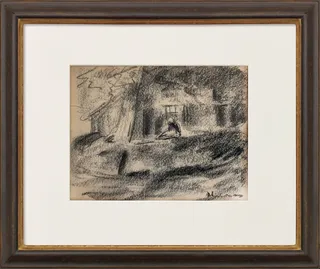
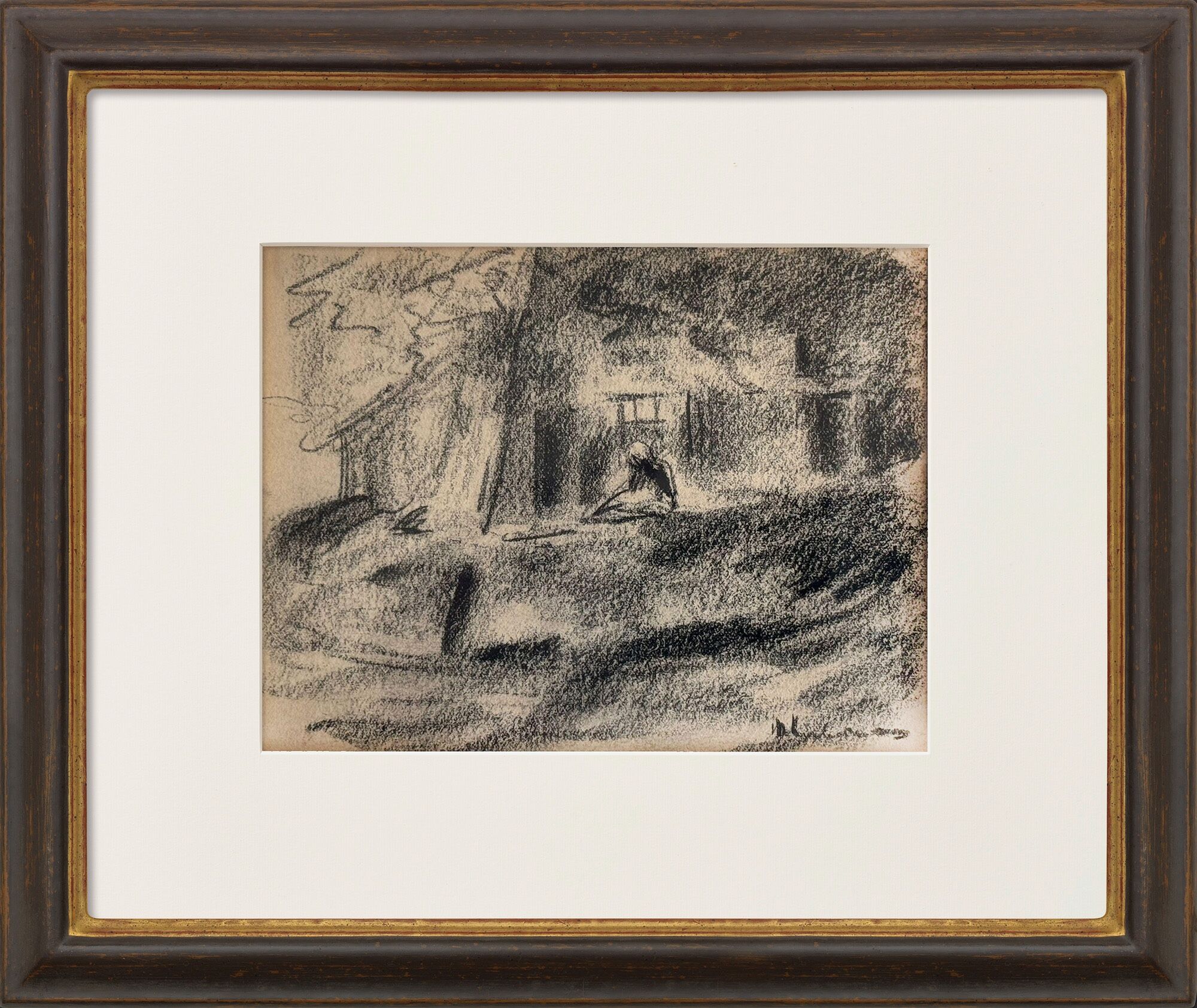
Picture "Under the Trees" (1892) (Unique piece)
Quick info
unique piece | signed | charcoal on paper | framed | size 34 x 36 cm
Detailed description
Picture "Under the Trees" (1892) (Unique piece)
Charcoal on paper, 1892. Signed. Motif size/sheet size 11.5 x 15 cm. Framed size 34 x 36 cm, as shown.
Producer: ars mundi Edition Max Büchner GmbH, Bödekerstraße 13, 30161 Hanover, Germany, [email protected]
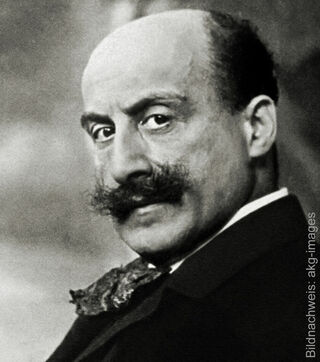
About Max Liebermann
1847-1935
Together with Lovis Corinth and Max Slevogt, Max Liebermann formed the triumvirate of German Impressionism and received numerous honours throughout his life. Through his commitment to elevating the life and work of ordinary people to art in unpretentious simplicity meant that Liebermann initially had to fight for recognition.
Liebermann only became a celebrated painter at the turn of the century when he increasingly devoted himself to motifs and scenes from the life of the upper-middle classes. He was an appointed professor at the Royal Academy and a member of the jury at the Academy exhibitions in 1897. In 1899 he founded the Berlin Secession and made it the most important German art institution. In 1920 Liebermann became president of the Prussian Academy and in 1932 its honorary president.
Because of his Jewish ancestry, he was ostracised by the Nazis and forced to resign from all offices. While watching the Nazis celebrate their victory by marching through the Brandenburg Gate from the window of his flat Liebermann supposedly said: "I can't eat as much as I want to vomit." In 1935 he died at the age of 87 after a long illness.
For Max Liebermann, nature was always a man-made (and man-inhabited) paradise. He found his motifs in gardens, parks and in bourgeois places of amusement. Liebermann is a master of staged light, which he lets fall on his scenes, often filtered through a canopy. The individual beams of light that penetrate to the ground are striking and have gone down in art history as "Liebermann's sunspots".


A one-of-a-kind or unique piece is a work of art personally created by the artist. It exists only once due to the type of production (oil painting, watercolour, drawing, lost-wax sculpture etc.).
In addition to the classic unique pieces, there are also the so-called "serial unique pieces". They present a series of works with the same colour, motif and technique, manually prepared by the same artist. The serial unique pieces are rooted in "serial art", a genre of modern art that aims to create an aesthetic effect through series, repetitions, and variations of the same objects or themes or a system of constant and variable elements or principles.
The historical starting point is considered to be Claude Monet's "Les Meules" (1890/1891), where, for the first time, a series was created that went beyond a mere group of works. The other artists, who addressed to the serial art, include Claude Monet, Piet Mondrian and above all Gerhard Richter.