
Picture "Giovane con canestra di frutta (Boy with a Basket of Fruit)" (ca. 1593), framed
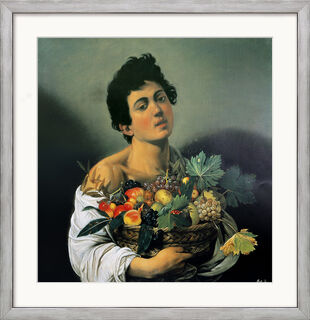
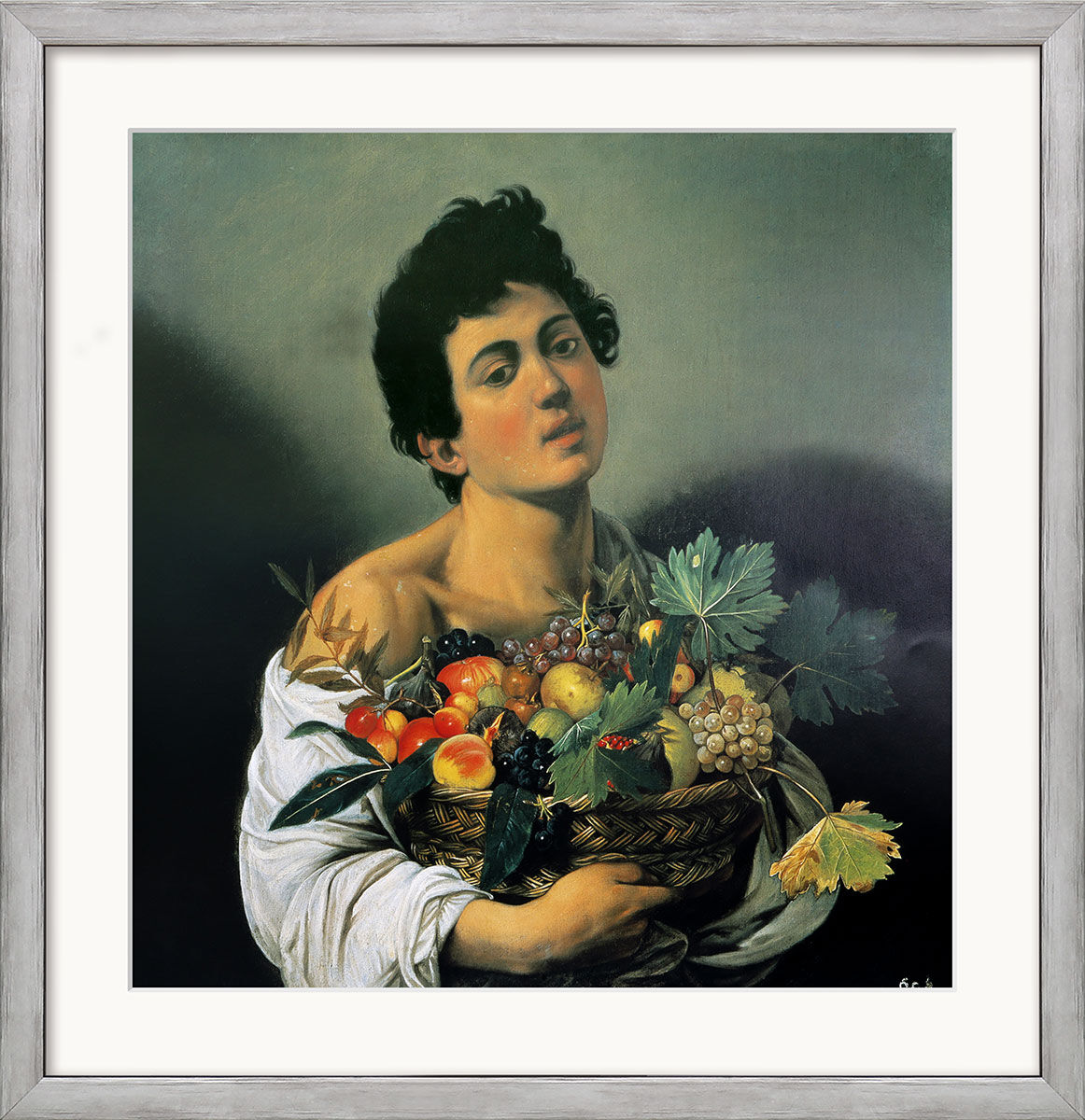


Picture "Giovane con canestra di frutta (Boy with a Basket of Fruit)" (ca. 1593), framed
Quick info
reproduction on paper | framed | passe-partout | glazed | size 73 x 71 cm (h/w)
Detailed description
Picture "Giovane con canestra di frutta (Boy with a Basket of Fruit)" (ca. 1593), framed
Original: ca. 1593, oil on canvas, 70 x 67 cm, Galleria Borghese Collection, Rome, Italy.
High-quality edition on paper. Framed in silver-coloured solid wood frame with passe-partout, glazed. Size 73 x 71 cm (h/w).
Producer: ars mundi Edition Max Büchner GmbH, Bödekerstraße 13, 30161 Hanover, Germany, [email protected]
Term used to describe the art of the 17th century. The Baroque art style, which originated in Rome around 1600, quickly spread through the visual arts, literature, and music across nerly all of Europe, lasting in the visual arts until 1770. The final phase is generally characterised by Rococo.
Characteristic features include: the pulsating movement of all forms, the abolition of boundaries between architecture, painting, and sculpture, leading to the typical "Gesamtkunstwerk" ("total work of art"), and, above all, the purposeful use of light, which became an important artistic component. The subordination of the individual parts to the whole resulted in the creation of a unified yet dynamic space, which is fully expressed in the magnificent buildings of this period.
The Baroque art, with its penchant for grandeur, splendour, and rushing abundance, clearly reflects the desire for representation, which was a concern of secular and ecclesiastical, especially the Catholic patrons strengthened by the Counter-Reformation. In painting, characteristic features of the Baroque, are manifested in altar and ceiling painting, history scences and portraits.
Typical representatives include artists such as Anthony van Dyck, Peter Paul Rubens, as well as Gian Lorenzo Bernini in the field of sculpture.