
Picture "The Action Painter" (1959)

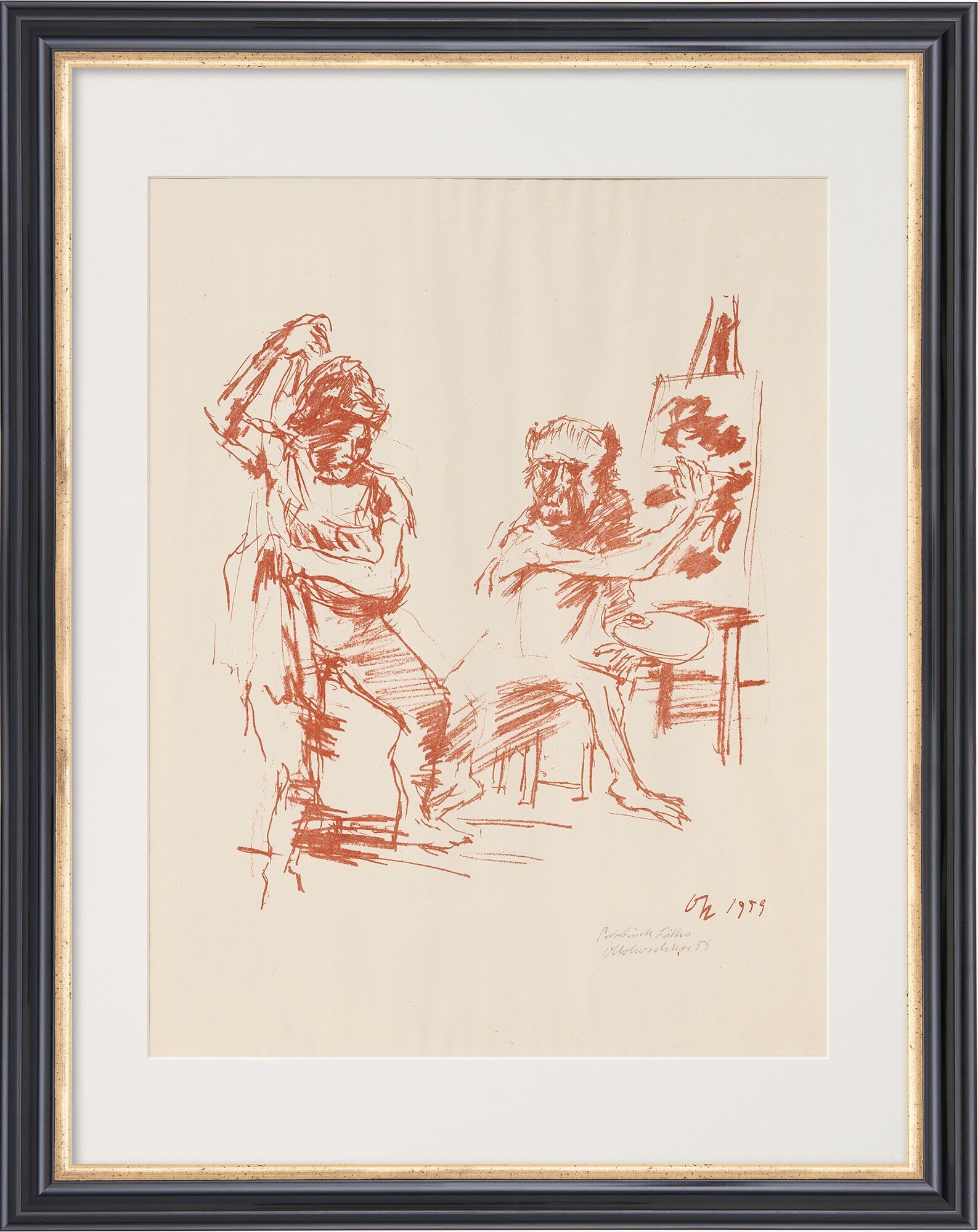


Picture "The Action Painter" (1959)
Quick info
limited, 30 copies | signed | dated | inscribed | lithograph on handmade paper | framed | size 73 x 64 cm
Detailed description
Picture "The Action Painter" (1959)
Lithograph, 1959. 30 numbered copies and additional prints in an undetermined number in black, blue and red chalk (offered here) on handmade paper. Signed, dated and labelled "Probedruck" (eng: "Test Print"). Monogrammed and dated in the plate. Printed by Griffelkunst, Hamburg-Langenhorn. Published by Vereinigung Griffelkunst Hamburg-Langenhorn. Catalogue raisonné: Wingler/Welz 212. Motif size 43.7 x 40 cm. Sheet size 63 x 48.5 cm. Size in frame 73 x 64 cm as shown.
Producer: ars mundi Edition Max Büchner GmbH, Bödekerstraße 13, 30161 Hanover, Germany, [email protected]
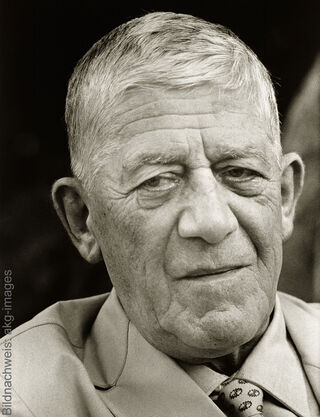
About Oskar Kokoschka
1886-1980
O.K. – those initials were of crucial importance for the art development of the 20th-century. His style of painting and drawing was trend-setting.
As a painter, graphic artist and writer, Oskar Kokoschka was an important pioneer of Expressionism. He studied at the Vienna School of Applied Arts and was influenced by the art of Vincent van Gogh, Ferdinand Hodler and the artists of the Vienna Secession such as Gustav Klimt. Deemed his art as degenerate by the Nazis, Kokoschka fled to Prague and later lived in exile in London.
The artist achieved particular fame through his portraits and city views. In his flower paintings, Kokoschka did not simply copy nature but constructed a new, artistic reality without completely abstracting the subject of the picture. In 1953 he founded the International Summer Academy of Fine Arts in Salzburg, which he called the "School of Vision".
The field of graphic arts, that includes artistic representations, which are reproduced by various printing techniques.
Printmaking techniques include woodcuts, copperplate engraving, etching, lithography, serigraphy, among others.
Depiction of typical scenes from daily life in painting, with distinctions between rural, bourgeois, and courtly genres.
The genre reached its peak and immense popularity in Dutch paintings of the 17th century. In the 18th century, especially in France, the courtly and gallant painting became prominent, while in Germany, a more bourgeois character developed.