
Quick info
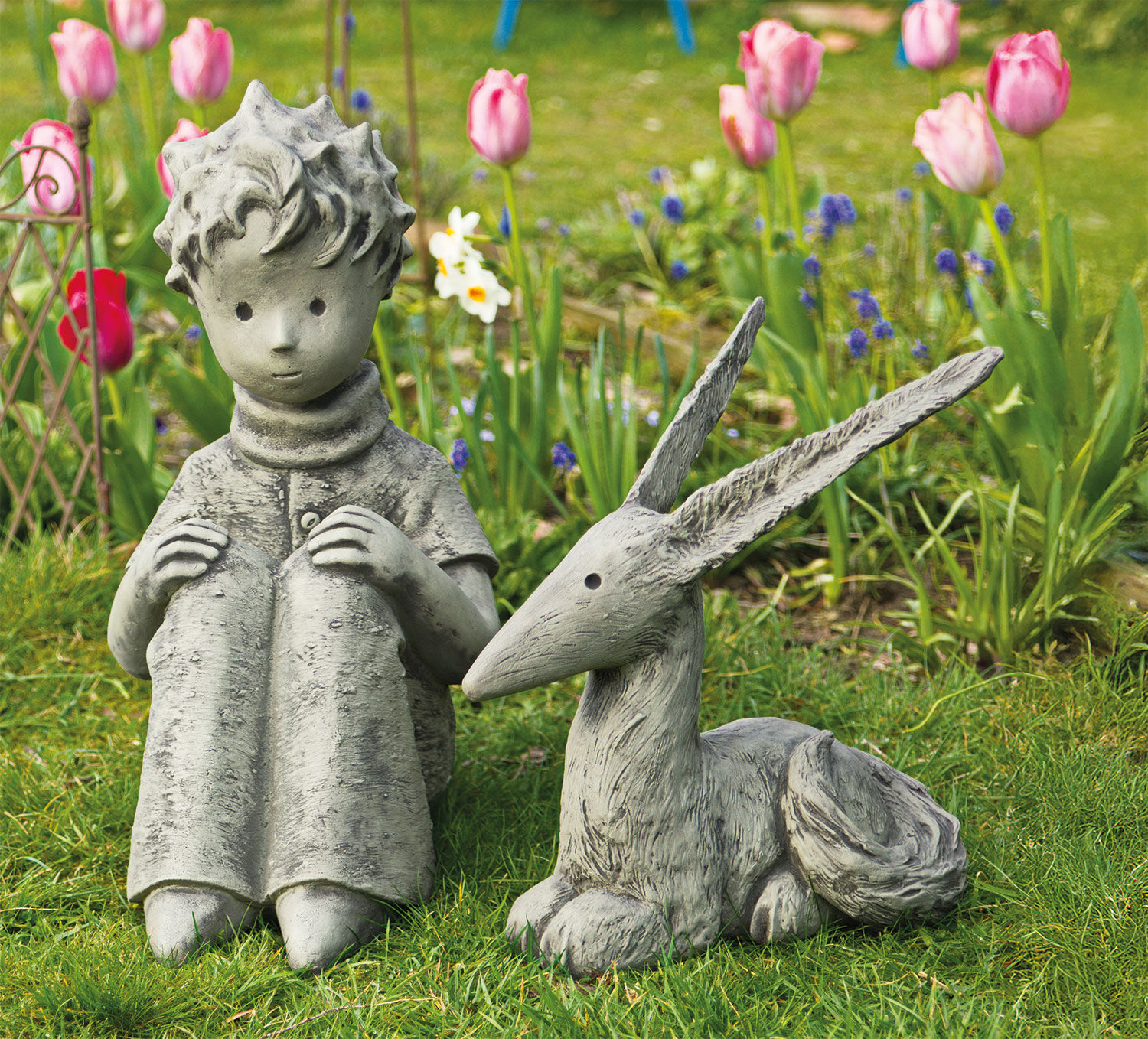
cast stone | not winterproof | prince: size 52 x 25 x 48 cm (h/w/d), weight 32 kg | fox: size 37 x 24 x 29 cm (h/w/d), weight 9 kg
Detailed description
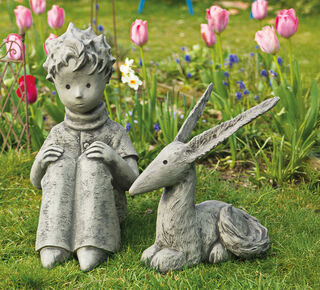
Set of 2 garden sculptures "The Little Prince and the Fox", cast stone
The story of The Little Prince is a world-famous classic that never fails to inspire reflection on one's own values and goals in life. The fox is the Little Prince's most important teacher. He teaches him the meaning of friendship, responsibility and trust (the so-called "taming").
Made from cast stone. Not suitable for outdoor use in winter.
The Little Prince: Size 52 x 25 x 48 cm (h/w/d). Weight 32 kg. © Antoine de Saint-Exupéry.
The Fox: Size 37 x 24 x 29 cm (h/w/d). Weight 9 kg. © Antoine de Saint-Exupéry.
Both sculptures in a set.
Producer: ars mundi Edition Max Büchner GmbH, Bödekerstraße 13, 30161 Hanover, Germany, [email protected]
This set contains the following products
Customer reviews
Alles top, perfekt, sauper und professionell verpackt, Figuren wunderschön, Lieferung auch top
Collective term for all casting processes that ars mundi carries out with the help of specialised art foundries.
Stone Casting
Similar to artificial marble, with the difference that instead of marble powder, the stone to be replicated is used in powder form.
Bonded Bronze (Cold-Cast-Bronze)
Bronze powder is polymer-bonded. Through special polishing and patination techniques, the surface of the cast takes on an appearance similar to that of bronze.
Imitation Wood
In order to guarantee absolute fidelity to the original, an artificially manufactured imitation wood is used as a base material that features typical wood characteristics: density, workability, colour, and surface structure.
Ceramic Mould Casting
Ceramic mould casting usually requires the use of casting clay, which is then fired and optionally glazed. Instead of the usual rubber moulds, plaster moulds are often used in ceramic casting and porcelain production.
Cast Bronze (Lost-Wax-Casting)
For the cast bronze, the thousand-year-old lost-wax technique is used. It's the best, but also the most complex method of producing sculptures.