
Picture "Harry's Car" (2022) (Unique piece)
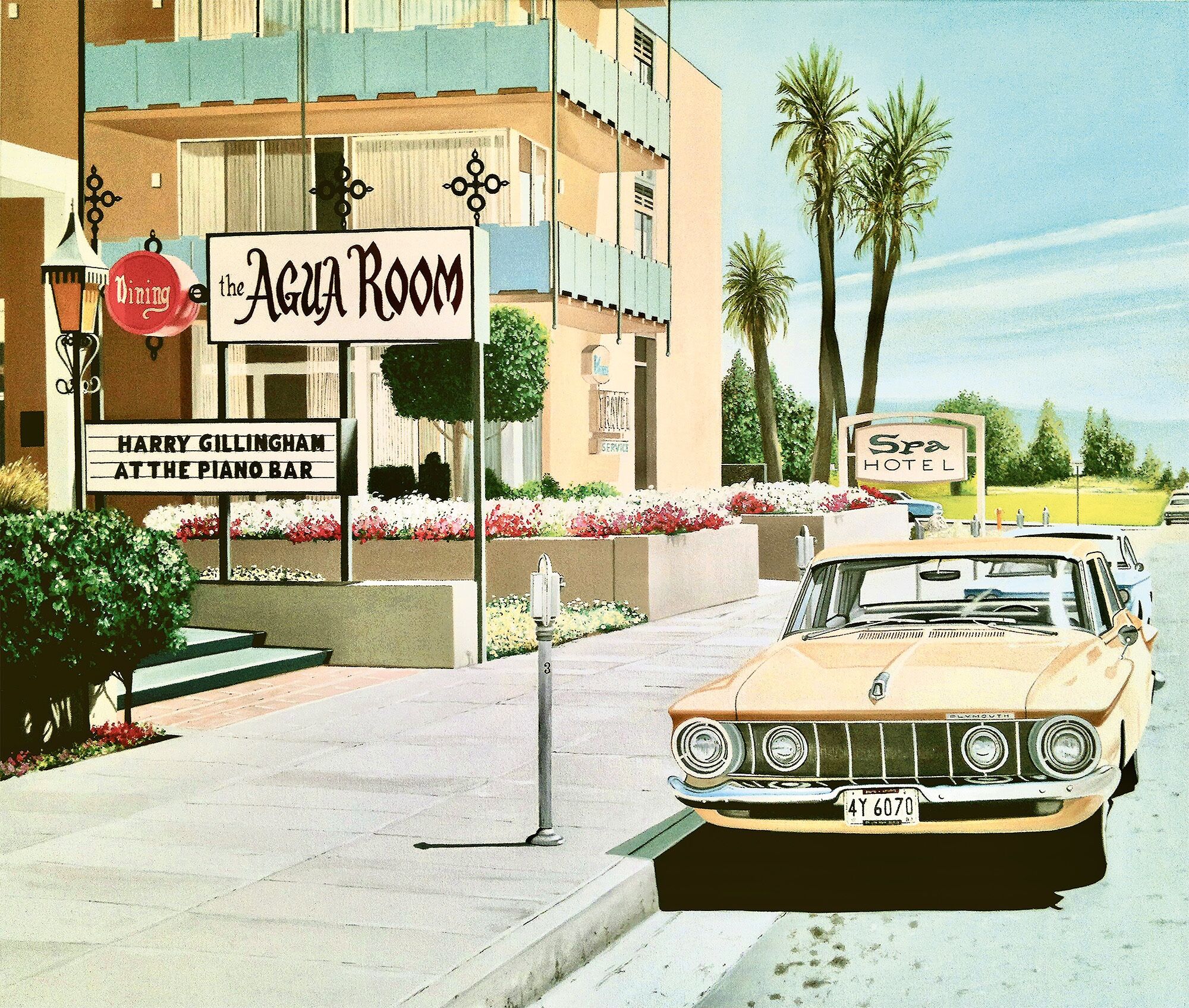


Picture "Harry's Car" (2022) (Unique piece)
Quick info
unique piece | signed | dated | titled | oil on canvas | unframed | size 100 x 120 cm
Detailed description
Picture "Harry's Car" (2022) (Unique piece)
Oil on canvas, 2022, signed, dated and titled. Unframed. Size stretched on stretcher frame 100 x 120 x 4 cm (h/w/d) as shown.
Producer: ars mundi Edition Max Büchner GmbH, Bödekerstraße 13, 30161 Hanover, Germany, [email protected]
About Thomas Kobusch
Born in 1960
Thomas Kobusch studied painting at the Fachoberschule für Gestaltung in Cologne, Germany, under Prof. Paul Karge.
In his paintings, Kobusch depicts everyday situations, with his portraits, landscapes or street scenes appearing as though they have been captured by chance and seeming very familiar. "For me, painting means bringing reality onto the canvas", says Kobusch. Although the motifs are clearly recognisable, they are not always rendered down to the smallest detail. However, the distancing from reality remains limited, as the result must always remain largely representational, according to the painter.
For Kobusch, the process of creating a work is just as important as the finished work itself, which is why he leaves part of the preliminary drawing visible in some series, thereby giving the viewer a "glimpse behind the scenes" of the painting.
A one-of-a-kind or unique piece is a work of art personally created by the artist. It exists only once due to the type of production (oil painting, watercolour, drawing, lost-wax sculpture etc.).
In addition to the classic unique pieces, there are also the so-called "serial unique pieces". They present a series of works with the same colour, motif and technique, manually prepared by the same artist. The serial unique pieces are rooted in "serial art", a genre of modern art that aims to create an aesthetic effect through series, repetitions, and variations of the same objects or themes or a system of constant and variable elements or principles.
The historical starting point is considered to be Claude Monet's "Les Meules" (1890/1891), where, for the first time, a series was created that went beyond a mere group of works. The other artists, who addressed to the serial art, include Claude Monet, Piet Mondrian and above all Gerhard Richter.