
Picture "Odalisque au Coffret" (1926) - LITO Masters, framed



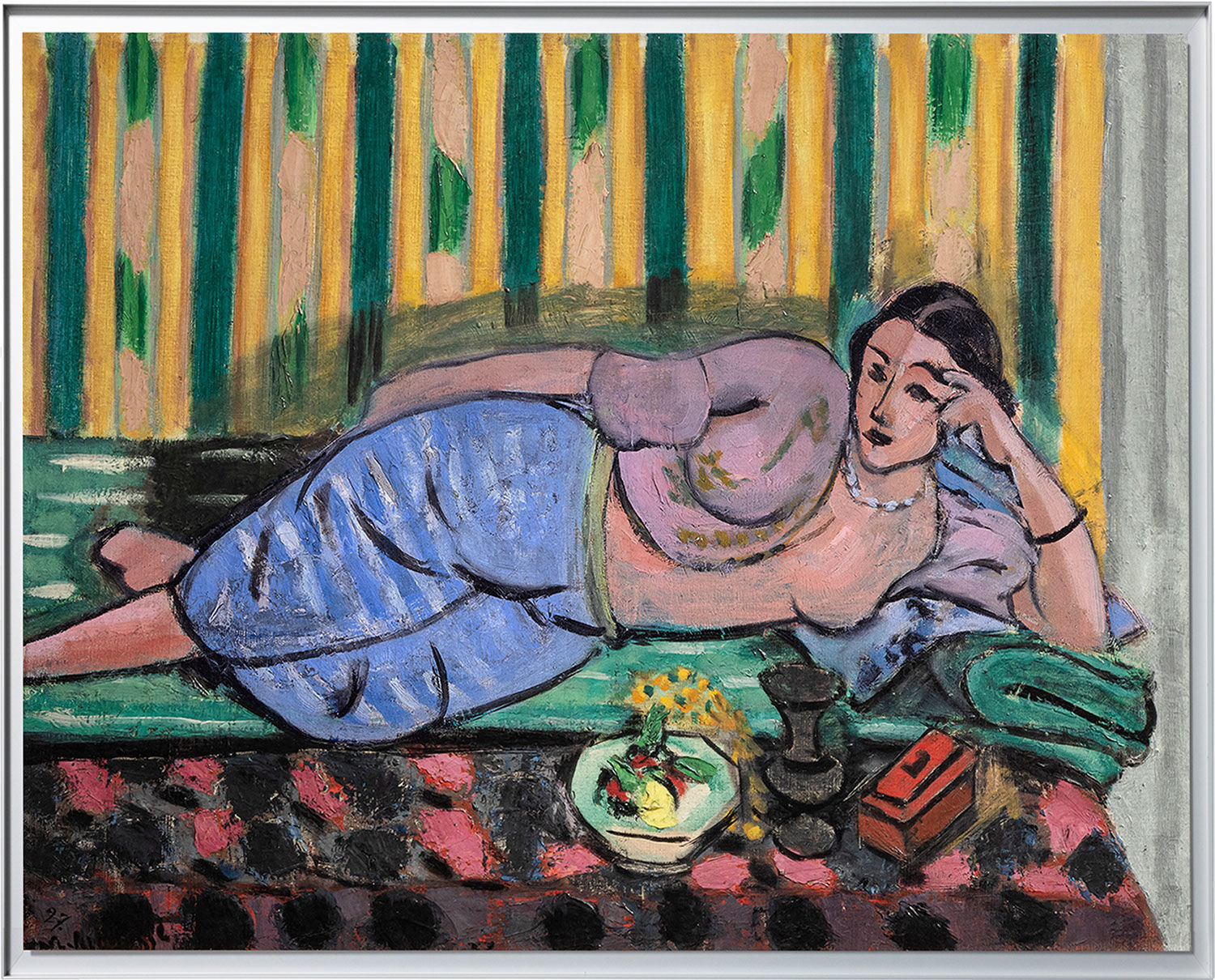


Picture "Odalisque au Coffret" (1926) - LITO Masters, framed
Quick info
limited, 350 copies | numbered | certificate | LITO Hi-Rnd© process on paper | framed | size 56 x 71 cm (h/w)
Detailed description
Picture "Odalisque au Coffret" (1926) - LITO Masters, framed
At the beginning of the 20th century, Henri Matisse was one of the most important representatives of the artistic avant-garde and Fauvism. His picture of the Harem Lady demonstrates his masterful command of form, colour, and line.
High-quality edition using the LITO Hi-Rnd© process on paper. Limited edition of 350 copies. Numbered and with certificate. Framed in white aluminium frame with shadow gap. Size 56 x 71 cm (h/w).
LITO Masters - Facsimiles in the Highest Perfection:
The name LITO Masters stands for a new era in the reproduction of artworks. The Austrian company has developed a technology, the patented LITO Hi-Rnd© process, that allows original artworks to be scanned in intricate detail and reproduced in the highest quality. Every brushstroke, every nuance of colour, and every fibre of the original canvas is preserved. LITO Masters already works with several renowned art institutions, including the Musée d'Orsay in Paris and the Musée Magritte in Brussels.
Producer: ars mundi Edition Max Büchner GmbH, Bödekerstraße 13, 30161 Hanover, Germany, [email protected]
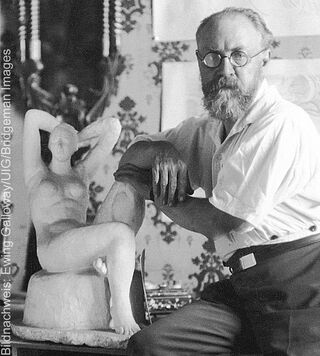
About Henri Matisse
1869-1954
The co-founder of Fauvism is today considered one of the most important painters of the 20th century.
Matisse was born on New Year's Eve 1869 in Le Cateau-Cambrésis, France. He only discovered his artistic talent late in life. After studying law, Matisse worked in a law firm. His mother brought him art supplies during a period of convalescence following an attack of appendicitis, which forced him to stay in bed. And this is how he started to paint. He decided to give up on working in the law firm and began to study in Gustave Moreau's free painting class.
Initially, he orientated himself towards the Impressionists and studied Cézanne. Through Pointillism, which he became acquainted with through Paul Signac, he finally adopted a more two-dimensional brushstroke and started to use strong colours. The scandalous exhibition of 1905 at the Salon d'Automne in Paris, which Matisse took part in together with Derain, Vlaminck and others, gave these "wild animals" the name "Fauves".
Subsequently, Matisse increasingly dispensed with spatial illusion and concentrated particularly on primary colours and black. Ornamental patterns reflect his experiences with Islamic art, which he encountered on his trips to Morocco in 1911/12.
Movement and music are the themes that fascinated him repeatedly. Thus, the painting "Dance" from 1909/10 and the mural of the same name from 1930-33 are among his most important major works.
In the 1930s, Matisse discovered "papiers découpés" (eng.: papercutting), the art of paper designs, which prepared his later work as a stage and costume designer.
Before his death on 3 November 1954, he was able to complete his late work, the decoration of the Notre Dame du Rosaire chapel in Vence.
Collective term for the painters and sculptors of the 20th century, such as Pablo Picasso, Salvador Dalí, Joan Miró, Marc Chagall and others, whose works are now considered iconic artworks of our times.