
Picture "Goldfish" (1912)
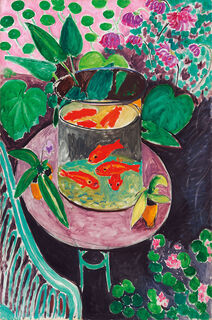
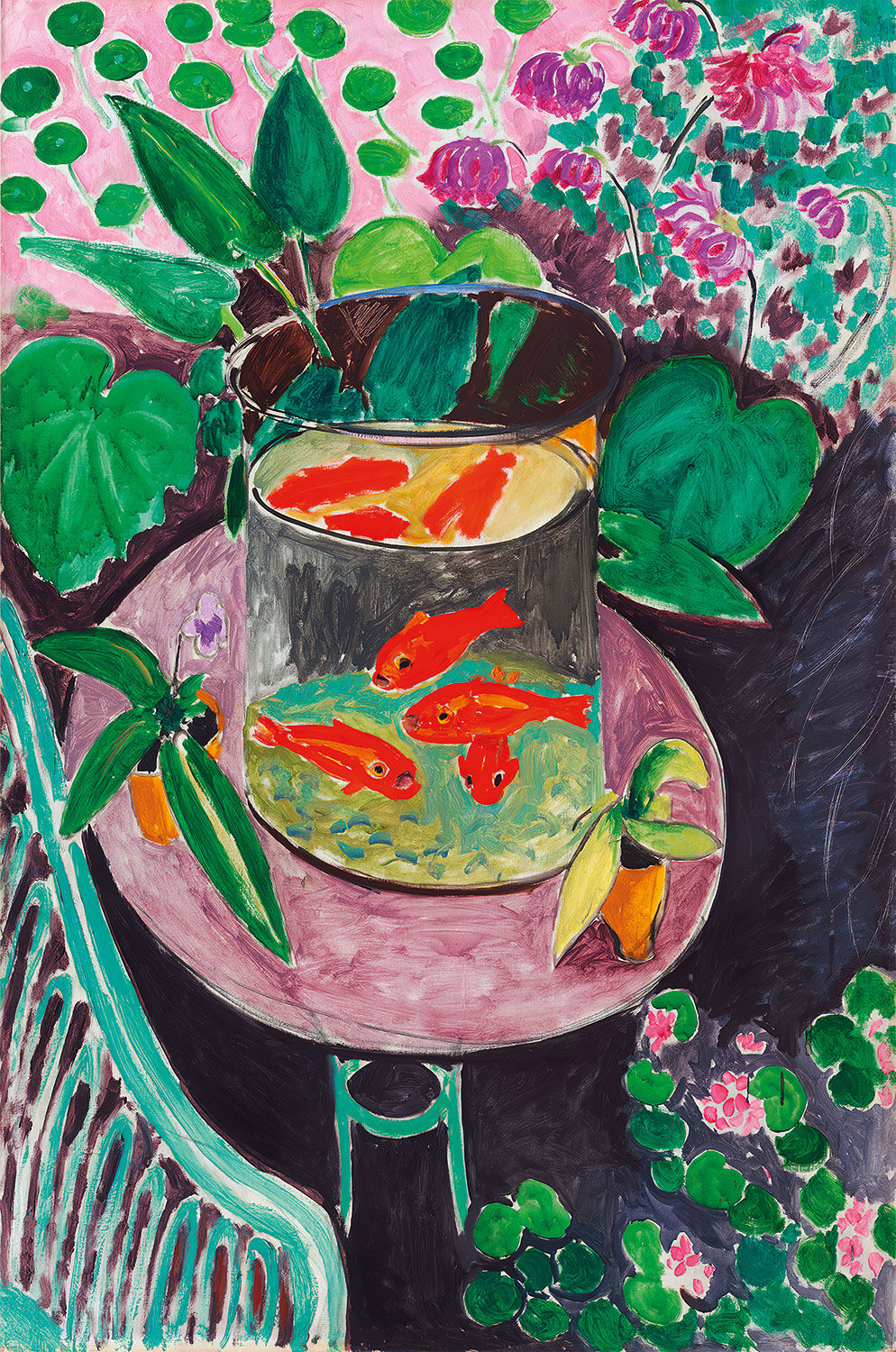


Picture "Goldfish" (1912)
Quick info
ars mundi Exclusive Edition | limited, 980 copies | numbered | reproduction on aluminium dibond | size 65 x 45.5 cm | suspension device
Detailed description
Picture "Goldfish" (1912)
Original: 1912, oil on canvas, 140 x 98 cm, Pushkin Museum, Moscow.
Edition after the original on aluminium plate. Limited to 980 copies and numbered. Size 65 x 45.5 cm (h/w). With suspension device. ars mundi Exclusive Edition.
Producer: ars mundi Edition Max Büchner GmbH, Bödekerstraße 13, 30161 Hanover, Germany, [email protected]
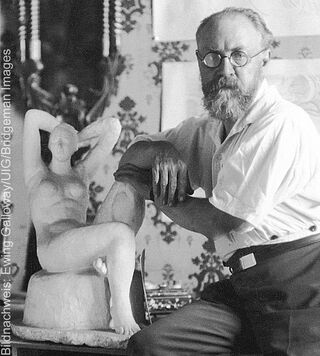
About Henri Matisse
1869-1954
The co-founder of Fauvism is today considered one of the most important painters of the 20th century.
Matisse was born on New Year's Eve 1869 in Le Cateau-Cambrésis, France. He only discovered his artistic talent late in life. After studying law, Matisse worked in a law firm. His mother brought him art supplies during a period of convalescence following an attack of appendicitis, which forced him to stay in bed. And this is how he started to paint. He decided to give up on working in the law firm and began to study in Gustave Moreau's free painting class.
Initially, he orientated himself towards the Impressionists and studied Cézanne. Through Pointillism, which he became acquainted with through Paul Signac, he finally adopted a more two-dimensional brushstroke and started to use strong colours. The scandalous exhibition of 1905 at the Salon d'Automne in Paris, which Matisse took part in together with Derain, Vlaminck and others, gave these "wild animals" the name "Fauves".
Subsequently, Matisse increasingly dispensed with spatial illusion and concentrated particularly on primary colours and black. Ornamental patterns reflect his experiences with Islamic art, which he encountered on his trips to Morocco in 1911/12.
Movement and music are the themes that fascinated him repeatedly. Thus, the painting "Dance" from 1909/10 and the mural of the same name from 1930-33 are among his most important major works.
In the 1930s, Matisse discovered "papiers découpés" (eng.: papercutting), the art of paper designs, which prepared his later work as a stage and costume designer.
Before his death on 3 November 1954, he was able to complete his late work, the decoration of the Notre Dame du Rosaire chapel in Vence.
A form of presentation favoured by professional photographers and exhibition organizers. Increasingly, artists are creating works for this carrier made of high-tech composite aluminium. The metallic surface creates a synthesis with the colours. White areas of the image are shimmering matt-metallic, depending on the light source, giving the image an elegant and puristic appearance. Thanks to the direct colour pigmentation the details are depicted precisely. Alu-Dibond is long-lasting and resistant.
Graphic or sculpture edition that was initiated by ars mundi and is available only at ars mundi or at distribution partners licensed by ars mundi.
> All ars mundi Exclusive Editions
Collective term for the painters and sculptors of the 20th century, such as Pablo Picasso, Salvador Dalí, Joan Miró, Marc Chagall and others, whose works are now considered iconic artworks of our times.