Art of the 1920s: Styles and Influences of the Golden Era
Sinful nightlife, prosperity and luxury, sexual freedom, technological progress, and women's emancipation: The myth of the 1920s tells of a decade of upheaval, innovation, and glamour.
The "Golden Era" in Germany began immediately after overcoming hyperinflation in 1923, but the Great Depression from 1929 already marked its end. The legend of the "Roaring Twenties" persists to this day, but in reality, not everything that glittered was gold. Alongside the positive developments, unemployment, poverty, and political unrest were part of everyday life.
For the visual arts of the "Golden Twenties", this period full of tension and contradictions offered great opportunities. The changing political and social conditions of the Weimar Republic allowed 1920s art to develop in many different directions. As a result, the art world displayed an unprecedented plurality of styles and actors. Several artistic forms of expression had their origin and peak in the art of the 1920s.
The Weimar Republic – A Time of Contrasts
At the beginning of the 1920s, Germany was still under the immediate impression of the consequences of World War I. With the lost war, the imperial era ended, and the republic was proclaimed in 1918. However, the "Weimar Republic" did not start under the best conditions.
The country suffered economically from the consequences of the war years. The Treaty of Versailles obliged the Germans to immense reparation payments, which led to severe inflation and the impoverishment of large parts of the population. The precarious situation also caused political unrest.
The situation only improved with the "Dawes Plan", which restructured reparations payments. A currency reform at the end of 1923 finally laid the foundation for economic recovery. The economy picked up, and trade and industry expanded. The infrastructure was improved, and unemployment declined. A newly introduced unemployment insurance in 1927 was also intended to protect against complete impoverishment.
However, the improved living conditions did not ensure lasting political stability. Instead, the political constellation remained fragmented, governments never lasted long, and acceptance of parliamentary democracy among the population was low.
Moreover, despite the economic upswing in the mid-1920s, it was far from true that everyone experienced prosperity. The phase of the "Roaring Twenties" was essentially a phenomenon of the metropolises. Here, a new middle class benefited from the improved economic situation.
In contrast, in rural areas, the precarious situation that had arisen immediately after World War I continued unchanged. Unemployment, housing shortages, and poverty remained the order of the day. As a result, many people sought their fortune by fleeing the countryside to the supposedly booming cities.
Social and Cultural Life in the Cities Flourished
The economic boom of the 1920s also brought changes within society. The somewhat improved job market situation provided more people with employment. Although the social milieus and classes that had survived the imperial era were not completely dissolved, their boundaries shifted or became more permeable.
After the hardships of World War I and rampant inflation, many citizens longed for a distraction from everyday life. Various entertainment formats, such as cinema, theatre, circus, revues, or sporting events, soon enjoyed great popularity. Dance events and recreational sports also gained significance. Even today, the nightclubs where people danced to jazz and swing following the American model are legendary.
The relationship between the sexes also changed, albeit only tentatively. The constitution introduced women's suffrage for the first time and provided for gender equality. Women now increasingly took up gainful employment and actively participated in social life.
Nevertheless, the Weimar Republic was still far from achieving lasting emancipation. During the "Golden Twenties", society and politics were in a state of great upheaval. In this atmosphere, the arts were also able to develop further.
A Spirit of Departure in 1920s Art
A positive atmosphere of change prevailed in the art of the 1920s. The Weimar Republic's constitution paved the way for this. It provided new, more open conditions for art and culture. From then on, art, science, and education were considered free and should be protected from external influence. Furthermore, they were to remain unaffected by censorship.
With this newfound freedom, the visual arts could develop significantly. Many artists departed from traditional styles and dedicated themselves to contemporary and avant-garde forms of expression. However, this did not lead to a uniform art style of the twenties. Instead, various schools coexisted, including:
- Expressionism
- Surrealism
- Dadaism
- New Objectivity
At the same time, artists developed a new sense of identity and reflected on their social mission. With their art, they actively wanted to contribute to promoting and strengthening democracy. At the same time, they turned their works of art into instruments to question and criticise politics and society.
Their paintings and sculptures often reflected the realities of life in the Weimar Republic. They addressed
- the consequences of the war,
- political tensions and industrialisation,
- a modern sense of life,
- city life,
- fashion and leisure activities.
A prime example of the politicisation of visual art in the 1920s was the interdisciplinary "November Group". This association brought together artists from painting, sculpture, theatre, music, and architecture. They were united by the idea of contributing to pluralism and democracy. Their goal was an enlightened and open-minded society. At the same time, art was to be democratised to be accessible to all people, regardless of social status.
Among the approximately 400 members of the November Group were many well-known artists of the 1920s, including:
- Bertolt Brecht
- Wassily Kandinsky
- Ludwig Mies van der Rohe
- Walter Gropius
Furthermore, the role of women in art changed in the 1920s. In previous decades, the art world was essentially dominated by men. This was largely due to the fact that women were rarely granted access to art academies. With the new rights provided by the Weimar Constitution, they were now increasingly able to establish themselves in the art world.
Some of the most famous female artists of the 1920s included:
- Jeanne Mammen
- Dörte Clara Wolff
- Else Lasker-Schüler
- Gabriele Münter
- Marianne von Werefkin
- Elfriede Lohse-Wächtler
- Hannah Höch
Various Styles Characterised the Art of the 1920s
The new conditions of the Weimar Republic enabled the free development of artistic forms of expression. This allowed for a great diversity of styles to emerge in the art of the 1920s, in which different emotional states of artists were expressed.
Some of the popular styles of the 1920s had their origins in the preceding decades, such as Expressionism and Dadaism. However, additional movements emerged that only developed in the 1920s, such as New Objectivity or the Bauhaus. Impulses for these styles also came from abroad, with France in particular influencing the art of the 1920s in Germany.
Expressionism
Expressionism brought the most significant innovations in classical modern art. Its origins date back to the early 20th century.
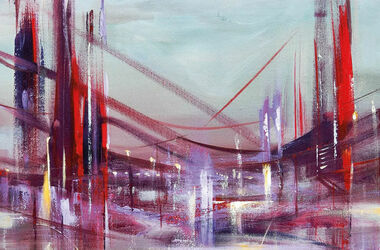
The artists of this epoch no longer saw it as their task to depict reality. Rather, they sought to express their emotional world in their works. Their artistic process was intuitive, emotional, and highly subjective. They reduced the forms and structures of their motifs, giving more space to colours and surfaces.
One of the pioneers of Expressionism was the artist group "Die Brücke". This now-legendary group was founded in 1905 by the following artists:
- Karl Schmidt-Rothluff,
- Ernst-Ludwig Kirchner,
- Fritz Bleyl, and
- Erich Heckel.
Later, Max Pechstein and Emil Nolde also became members. Although the group dissolved in 1913, its members remained highly influential in the art of the 1920s.
Equally influential was "Der Blaue Reiter" – an editorial collective founded by Franz Marc and Wassily Kandinsky in 1912. This Munich-based artist group included:
- August Macke
- Gabriele Münter
- Marianne von Werefkin
- Alexej von Jawlensky
- Paul Klee.
"Der Blaue Reiter" dissolved as early as 1914. However, some former members reorganised in 1924 under the name "Die Blaue Vier" ("The Blue Four"). This group of artists included:
- Lyonel Feininger
- Wassily Kandinsky
- Paul Klee
- Alexej von Jawlensky
Art Styles of the 1920s: Surrealism
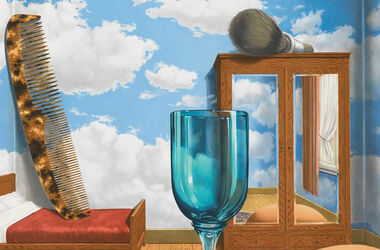
Surrealism originated in 1920s Paris. Its artists no longer wanted to limit themselves to motifs from the real world. Instead, they sought their imagery in the subconscious. Their works visually depicted scenes from visions, dreams, emotions, fantasies, and states of intoxication.
The artists combined objects from completely different contexts and sometimes alienated them significantly– sometimes to the point of abstraction. Surrealist works can appear grotesque, sometimes disturbing, but also humorous.
Among the most famous surrealists of the 1920s were:
With an exhibition in Paris in 1925, surrealists presented their art to the public for the first time. In Germany, Max Ernst was the most significant representative of Surrealism in the 1920s.
Bauhaus
The Bauhaus was one of the most important drivers of modern architecture, art, and design. This German art school was considered Europe's centre of the avant-garde. It was founded in 1919 in Weimar by architect Walter Gropius.
Gropius saw the fine arts at the beginning of the 20th century in a deep crisis. His concept provided for a fundamental stylistic new beginning. In this art, architecture, and crafts should work together.
The Bauhaus style placed functionality as a guideline over the entire design process. Accordingly, Bauhaus's design was pragmatic and minimalist. The artistic form concept featured clear lines and structures, omitted decorations, and limited the colour palette to a minimum. This style was later also adopted by 1920s painters in their works. As such, Bauhaus art became a pioneering art school of the modern.
Many major figures of modern art were active at the Bauhaus, including:
- Oskar Schlemmer
- Lyonel Feininger
- Paul Klee
- Wassily Kandinsky
- László Moholy-Nagy
Under pressure from the Nazis, the Bauhaus was forced to close in 1933. However, its visionary ideas and concepts continue to inspire visual art even today.
Art of the Golden Twenties: Dadaism
Dadaism should be understood less as an art style and more as an artistic concept and an attitude towards life. It all began in 1916 at the Cabaret Voltaire in Zurich. Here, artists from various disciplines gathered, united primarily by one thought: frustration with bourgeois society and its art.
Their counterreaction consisted of seemingly anarchic, nonsensical, and chaotic performances. With a great deal of irony and spontaneity, the dadaists created art that, by the standards of the time, was not considered art: They performed nonsense sound poems, made art collages out of scrap metal, fabric, or paper, as well as newspaper clippings, and staged grotesque performances.
The Dada concept gradually spread to many art centres, such as Paris, New York, and Berlin. In the 1920s, Dadaism remained present in art. In Germany, it was represented by:
- Kurt Schwitters
- Hannah Höch
- Raoul Hausmann
- Max Ernst
New Objectivity
New Objectivity was particularly characteristic of art in the 1920s. It is considered a direct response to the political and social changes after World War I.
The art movement split into two camps. The representatives of "Verism" saw their mission as confronting the audience with reality as unfiltered as possible. Using motifs from urban life and the working world, they sharply criticised political and social conditions. They caricatured and exaggerated people and objects – often to the point of the grotesque. Famous representatives of Verism were Otto Dix and George Grosz.
The artists of "Classicism" reacted quite differently to the circumstances of life. They saw their works as an opportunity to escape the harsh reality. In motifs such as romantic landscapes and idyllic family scenes, they expressed a deep longing for peace and tranquillity.
Art Déco
Art Déco was also one of the most widespread styles of the 1920s. Its design principles influenced not only painting but also architecture, fashion, everyday objects, interior design, and jewellery design.
With its cool and elegant aesthetic, the style combined many different design elements. Art Déco artists worked with many details and ornaments but abandoned the nature-inspired motifs of Art Nouveau. Instead, they used abstract forms and structures such as round arches or geometric patterns. Symmetrical forms were also very popular.
Art Déco reflected many people's longing for prosperity. As a result, objects were often made from luxurious materials, with gold being a particularly popular colour.
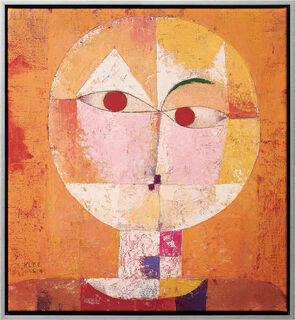
Some works from the 1920s by well-known artists




The Art of the 1920s – 100 Years Later
Since the early 21st century, a small "Renaissance" of the "Golden Twenties" can be observed. This epoch, so rich in history, serves as a backdrop for films and TV series, show companies present programmes in the style of the 1920s, and exhibitions on the art of the 1920s, such as New Objectivity or Bauhaus, are regularly held in art galleries.
However, a significant influence of 1920s artistic aesthetics on contemporary painting is not evident. Nonetheless, some art styles that were popular in the 1920s remain relevant today. Both Expressionism and Surrealism continue to inspire many contemporary artists. Likewise, the Bauhaus aesthetic remains present in modern architecture and design. Additionally, many artists who were active in this decade are still highly regarded and, in some cases, fetch high prices.