The Most Expensive Paintings in the World
Not only the art world, but the entire public takes notice when record sums are paid for works of art at auctions – as most recently in 2017 when 450 million dollars were paid for what is currently the most expensive painting of all time, "Salvator Mundi" by Leonardo da Vinci. This sale marks the latest peak in a trend towards ever higher auction proceeds.
Below we introduce you to the paintings that are currently the most expensive in the world. We'll be looking at the buyers and purchase prices as well as other interesting facts about these works of art.
Overview: List of the Ten Most Expensive Paintings in the World (As of August 2026)
Only sales that took place at public auctions and private sales that are conclusively documented are listed here. Anonymous private sales cannot be taken into account because the sale amounts are uncertain.
| Rank | Artist | Work | Price in US Dollars | Year of Sale |
| 1 | Leonardo da Vinci | "Salvator Mundi" | 450.3 million | 2017 |
| 2 | Gustav Klimt | "Portrait of Elisabeth Lederer" | 236.4 million | 2025 |
| 3 | Andy Warhol | "Shot Sage Blue Marilyn" | 195 million | 2022 |
| 4 | Jackson Pollock | "Number 7A, 1948" | 181.2 million | 2026 |
| 5 | Pablo Picasso | "Les femmes d'Alger (Version "O")" | 179.4 million | 2015 |
| 6 | Amadeo Modigliani | "Nu couché" | 170.4 million | 2015 |
| 7 | Roy Lichtenstein | "Masterpiece" | 165 million | 2017 |
| 8 | Amadeo Modigliani | "Nu couché (sur le côté gauche)" | 157 million | 2018 |
| 9 | Georges Seurat | "Les Poseuses, Ensemble" | 149.2 million | 2022 |
| 10 | Francis Bacon | "Three Studies of Lucian Freud" | 142.4 million | 2013 |
Good to Know – Auction vs. Private Sale: When discussing the world’s most expensive paintings, usually only works sold at public auctions are considered. The reason for this is that reliable information about purchase prices is available only in these cases.
However, not all works of art are sold through public auctions at auction houses. A substantial proportion – reportedly almost 60 per cent in 2025 – changes hands through private sales. The term "Private Sales" encompasses various forms of transactions. Auction houses, art dealers or galleries are frequently involved. They establish contacts and act as intermediaries between buyers and sellers.
However, sales without a third party also fall into this category. Numerous world-famous works have been sold privately. Well-known examples of "Private Sales" include "The Card Players" by Paul Cézanne, "Orange Marilyn" by Andy Warhol or "Nafea Faa ipoipo" by Paul Gauguin. As the parties to the transaction usually agree to keep the purchase price confidential, reliable information about it is generally unavailable.
The Five Currently Most Expensive Works of Art in the World in Detail

Rank 1: Leonardo da Vinci – "Salvator Mundi"
The auction at Christie's auction house on 15 November 2017 went down in art history: On this day, "Salvator Mundi" by Leonardo da Vinci (1452–1519) fetched 450 million dollars and thus became the most expensive work of art in the world.
However, even many years after the sensational auction, the painting measuring 66 x 46 cm centimetres still raises questions. To this day, for example, it has not been conclusively established who owns it. Although the buyer remained anonymous at the auction, current information suggests that it was Badr bin Abdullah, the Minister of Culture of the Kingdom of Saudi-Arabien. He is said to have acted on behalf of the country's Prime Minister and Crown Prince, Mohammed bin Salman. However, this has not been proven.
Its current location is also unknown. Furthermore, considerable doubts have repeatedly been expressed as to whether the work dating from around 1500 was actually painted by Leonardo da Vinci. The painting technique is said to be uncharacteristic of da Vinci, and the painting is also said to have been restored and overpainted too often for the artist's hand to be identified beyond doubt. It is entirely possible that a pupil painted the picture and da Vinci added only a few passages. To this day, there is no certainty about its authorship. It can therefore be assumed that the most expensive painting in the world will continue to generate speculation and headlines for some time.

Rank 2: Gustav Klimt – "Portrait of Elisabeth Lederer"
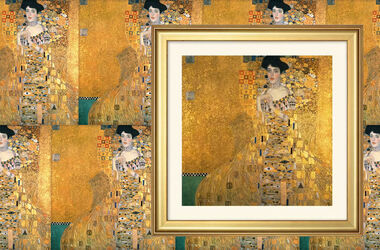
Gustav Klimt (1862–1918) is represented no fewer than four times on the list of the most expensive paintings in the world with works that sold for over 100 million dollars. The leader among his paintings is "Portrait of Elisabeth Lederer", which changed hands for 236.4 million dollars in November 2025. The buyer remained anonymous at the auction and is still unknown today.
The painting from 1916 represents a particular artistic phase in the work of the Art Nouveau painter. Klimt had always drawn inspiration from different cultures and epochs, for example classical antiquity or Egyptian art. "Portrait of Elisabeth Lederer" showed the influence of Far Eastern art, which Klimt had discovered for himself from around the middle of the 1910s. He painted the young woman in a Chinese dragon robe and surrounded her with a multitude of figures and objects with an Asian appearance.
Furthermore, the painting also has a connection to the biography of Klimt. The woman in the picture is the daughter of Serena and August Lederer. The Austrian industrialist family had supported him for many years and added his paintings to their collection.
Rank 3: Andy Warhol – "Shot Sage Blue Marilyn"
"Shot Sage Blue Marilyn" is part of a series of four screen prints by the American Pop Art artist Andy Warhol (1928–1987), which became famous under the name "Shot Marilyn". In 2022, "Shot Sage Blue Marilyn" was sold to the American art dealer Larry Gagosian for 195 million US dollars. It thus topped the list of the most expensive paintings in the world for over three years.
The high sale price is likely to be attributable not least to the work's unusual history. In 1964, Andy Warhol had created a series of five portraits of Marilyn Monroe based on screen prints of a press photograph of the Hollywood icon. Warhol had coloured each of the five variants using different colours. The series of pictures acquired its legendary status following an incident in the autumn of the same year. For a reason that remains unexplained to this day, the American artist Dorothy Podber had entered the studio of Warhol with a pistol and shot at the portraits of Monroe. The bullet passed through four of the five pictures, which would subsequently go down in art history as the "Shot Marilyns".
The originals in the series became highly sought-after collectors' items and changed hands for tens or hundreds of millions. The proceeds from the auction of "Shot Sage Blue Marilyn" went to the charitable Thomas-und-Doris-Ammann-Stiftung in Zürich.
You can read more about the "Shot Marilyns" series in our article "Andy Warhol's Marilyn - 10 Facts About the Legendary Artwork".
Rank 4: Jackson Pollock – "Number 7A, 1948"
Abstract paintings account for only a comparatively small proportion of the list of the most expensive paintings in the world. However, several works are by the American painter Jackson Pollock (1912–1956). He also created what is currently the most expensive abstract painting.
In May 2026, his work "Number 7A, 1948", measuring just over 90 cm in height and 3.30 metres in width, was sold at Christie's to an unknown bidder for around 182 million dollars. The auction house had not held back on superlatives when presenting the monumental work beforehand. With "Number 7A, 1948", one would "witness the reinvention of painting". The painting by Pollock was described as pure expression. It dispensed entirely with narrative elements and thus completely detached itself from the conventions of traditional painting for the first time.
This picture undoubtedly ranks among the key works of Abstract Expressionism. Here, Pollock used the drip painting technique, with which he had begun experimenting in 1946. In a spontaneous process, he dripped and poured the paints onto a canvas lying on the floor. The resulting web of streaks, splashes and patches develops a strong presence and dynamism even without figurative objects. With "Number 7A, 1948", Christie's concluded, Pollock had created one of the first truly abstract paintings in art history.
Rank 5: Pablo Picasso – "Les femmes d’Alger (Version "O")"
When "Les femmes d’Alger (Version "O")" by Pablo Picasso (1881–1973) was auctioned for 179.4 million dollars in 2015, it surpassed the previous leader, the triptych "Three Studies of Lucian Freud" by Francis Bacon, by around 30 million dollars. The identity of the painting's new owner was never made public.
The work marks the culmination of an extensive cycle of works by Picasso from 1954 and 1955. The series "Les femmes d’Alger" comprises fifteen oil paintings labelled A to O as well as over 100 drawings and prints. It is of the greatest importance both within the complete works of Picasso and in art history. Here, Pablo Picasso explored the principle of variation in painting in the most consistent manner imaginable.
His inspiration was the painting "Femmes d’Alger" by Eugène Delacroix (1798–1863). Picasso greatly admired the French painter of the Late Romantic period and had studied his work extensively in the Louvre. However, he did not copy the original, but developed numerous variations based on it. In doing so, he repeatedly changed the painting style, the composition and the perspective or concentrated on individual objects in the picture. Today, the fifteen paintings are distributed across various public and private collections.

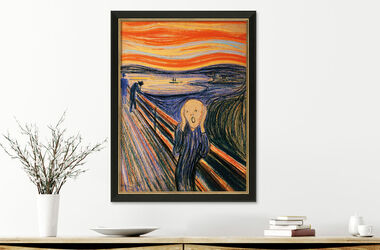
Famous, but Without a Price Tag: "The Scream" by Edvard Munch
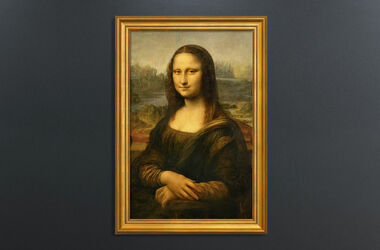
"The Scream" by Edvard Munch (1863–1944) is likely to be among the best-known motifs in painting. As with the Mona Lisa, one might assume that this picture must also rank among the most expensive paintings in the world. However, the circumstances of this work are somewhat different again.
Between 1893 and 1910, Munch created a total of four paintings under the title "The Scream" with very similar motifs, but using different techniques and in different sizes. The version that is most famous today, in oil, tempera and pastel on cardboard, dates from 1893 and has belonged to the collection of the Norwegian National Gallery in Oslo since 1910. As with the "Mona Lisa", its market value can therefore hardly be determined.
The same applies to two further paintings in oil and tempera on cardboard and pastel on cardboard respectively. These can be found in the Munch Museum Oslo. Only one variant of "The Scream" has been traded on the public art market. In 2012, the pastel version from 1895 fetched around 120 million dollars at Sotheby's. The buyer is said to have been the American entrepreneur and art collector Leon Black.
You can find more about the most famous work by Edvard Munch in our magazine article "Edvard Munch "The Scream" - Myth and Milestone of Art History".
The Historical Development of Record Prices on the Art Market
Until the mid-1980s, the highest bids were still in the single-digit millions. However, between 1985 and 1990, five paintings were already auctioned for tens of millions. In 2004, "Boy with a Pipe" by Pablo Picasso became the first painting to cross the 100 million threshold. Since then, the top position on the list of the most expensive paintings has changed regularly.
The rise in prices has gained considerable momentum again since the 2010s. The sales of the ten most expensive paintings in the world thus took place between 2013 and 2026. A total of 27 paintings are now already in the hundreds of millions. Such top prices are undoubtedly an absolute exception and are considered hardly representative of the diverse art market. Nevertheless, it is above all the spectacular auctions that bring the art world into the public eye.
On the one hand, the public is fascinated, but on the other, the question of how appropriate such record prices for works of art are is repeatedly raised. Whether the paintings by da Vinci, Klimt or Picasso are really worth the millions can hardly be determined by objective criteria. What is quite likely, however, is that the 450 million for "Salvator Mundi" will eventually be surpassed.