Andy Warhol's Marilyn - 10 Facts About the Legendary Artwork
An icon pays tribute to an icon: Andy Warhol, a legend of Pop Art, was a great admirer of Marilyn Monroe, one of the most iconic figures of the 20th century. He took up her portrait in several series of works, interpreting it in his signature silkscreen print aesthetic.
The pictures from the "Shot Marilyns" series achieved a special status. Their unique history made them milestones of Pop Art: Warhol created the first portraits of Monroe shortly after her tragic death. The originals in the series were literally shot at, and in the following decades, they fetched millions at auction.
1. Warhol's Marilyn Series Was Hit by a Bullet
Andy Warhol was fascinated by both Monroe's beauty and her status as a public figure. He saw her as a pop culture icon and the ultimate embodiment of celebrity. At the same time, he saw her as a kindred spirit because, like himself, she was often misunderstood, underestimated, and not sufficiently appreciated.
When the Hollywood legend died in 1962, he created the "Marilyn Diptych" in her memory. It was based on a press photograph from 1953. He used the same photograph again in 1964 for a series of silkscreen prints.
The pictures in this series received their name after an incident in the autumn of 1964 at Warhol's studio "Factory". One day, the American artist Dorothy Podber, a friend of Warhol's, entered the studio on East 47th Street in New York. Various versions exist today about what happened next. What is certain is that Podber pulled out a gun and fired a shot at Monroe's pictures, which were leaning against the wall one behind the other. Afterwards, she is said to declare the act a "performance piece".
The bullet pierced four of the pictures. Warhol attempted to repair the bullet holes but was only partially successful. The damage remains more or less recognisable in the four works.
Since the attack, the four affected works have been named:
- Shot Red Marilyn,
- Shot Orange Marilyn,
- Shot Light Blue Marilyn and
- Shot Sage Blue Marilyn.
The only version that remained unscathed was "Turquoise Marilyn". Undoubtedly, it was Dorothy Podber's attack that made this series so popular and increased its value immensely.
2. The "Shot Marilyns" Template Never Really Existed
After Marilyn Monroe's death in 1962, Andy Warhol allegedly came across the photo he would later use for the "Shot Marilyns" series at a flea market. The photo was originally published in connection with the 1953 film "Niagara", in which Monroe played the leading role. It was used by the production company 20th Century Fox to promote the movie.
However, the black-and-white photo was originally larger and in a different size than the motif that Warhol later used for his silkscreen prints. He cropped about the lower third of the original and cut it into a square. From this cut-out, Warhol created a screen print template, which he used to produce the different versions of the "Shot Marilyns".

3. Warhol Used His Typical Silkscreen Prints for the "Shot Marilyns"
Like many of his works, Warhol's Marilyn Monroe was also silkscreen printed. Silkscreen printing is a printing technique that enables an endless number of prints to be made from a single original. The template consists of a screen plate made of metal or a fine mesh, with only the areas corresponding to the design being permeable to ink.
During the silkscreen printing process, ink is transferred through the screen onto the medium using a squeegee. This technique can be used on many materials but is primarily used for printing on textiles, plastic, ceramics, metal, wood, or glass. However, the printing speed is slow compared to other methods, such as offset printing.
In the early 1960s, he discovered silkscreen printing for himself. It fitted perfectly with his artistic concept, which differed fundamentally from the traditional understanding of art at the time. Warhol did not believe in the principle of the unique original work but was convinced that art was a consumer product that could be produced in series. In this way, art could be made accessible to a broader audience.
Additionally, he was open about his desire for financial success. To achieve his goals, silkscreen printing was the perfect tool. Warhol also used this method to produce the Marilyn Monroe series. However, before printing, he first painted the canvas with different acrylic colours, which later gave the five versions of the portrait their names.
4. Warhol Repeatedly Reinterpreted Monroe's Portrait
Throughout his career, Andy Warhol was inspired by Marilyn Monroe to create several series of works. After the "Marilyn Diptych" in 1962 and the "Shot Marilyns" in 1964, he reinterpreted the iconic motif multiple times in the following years. Although he always used the same photographic template, all subsequent picture cycles differed significantly from the previous portraits.
His earlier series emphasised Monroe's beauty and status as an American icon. However, in the resumption, he showed - both symbolically and literally - the dark side of the famous portrait. He did not use the original photo, but a negative print for the silkscreen prints. As early as 1967, he created a portfolio on this basis, in which he coloured the surfaces with bright colours.
In the "Reversal Series" of the late 1970s, he took an even more radical approach. He essentially orientated himself on the character of the negative, leaving large parts of the picture black. He only left a few segments such as the eyes, lips, nose, and hair white or coloured them with bright colours.
The image impression of this Marilyn series is far from any glamorous portrait. Instead, Monroe appears rather eerie, almost ghostly. Rather than appearing as a radiant icon, she becomes a symbol of the darker side of fame. At the same time, Warhol critically reflected on his own career with this reinterpretation. By erasing almost all the typical features of his original work, he destroyed the elements that had made him so successful in the years before.
5. The "Shot Marilyns" Series is Considered a Milestone in Pop Art
Today, the "Shot Marilyns" series is among Warhol's most significant and best-known works. Only a few of his works have reached a comparable level of popularity, such as his "Campbell’s Soup Cans" or his Mao portrait.
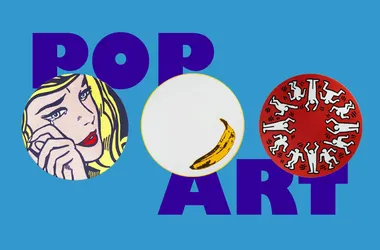
In art history, Warhol's tributes to Monroe have long been regarded as the epitome of Pop Art, as they combine many of its defining characteristics. Pop Art drew its motifs from everyday consumer goods, celebrities, advertising, comics, and mass media.
Pop Art artists distorted their subjects, placed them in new contexts, or exaggerated them. The underlying idea was to criticise the mechanisms of the media and consumer society.
At the same time, artists such as Warhol viewed art as a consumer product, producing and selling their works in the same way as industrial products. Serial production aimed to make art more affordable and accessible to the masses.
Many of these ideas are reflected in Warhol's Marilyn. Here, he focused on one of the most famous American figures of the 1950s and 1960s. Rising to fame through her films, Marilyn Monroe became a sex symbol and a popular face of high society. By serially repeating her portrait, Warhol exposed what society had obviously seen in Monroe - a nice-looking consumer object.
6. Warhol’s "Shot Marilyns" in Visual Analysis
Andy Warhol was a master of reinterpreting motifs and giving them alternative meanings in unexpected contexts. His way of manipulating pictorial objects played a key role in this process. Warhol's Marilyn is a representative example.
The first significant change was cropping the original photo into a square size of 101.6 x 101.6 cm so that Monroe's head almost completely filled the frame.
Equally striking were the colour modifications Warhol made. Using bright colours, Warhol created several highlights in Monroe's portrait:
- He coloured the eyelids in light blue and the hairstyle in an unnatural, bright yellow.
- The mouth is particularly striking. He accentuated the lips in a dark red colour, making the dazzling white appear even brighter.
- All of these colour areas extend beyond the natural contours. The colours of these three facial features contrast sharply with the pink of the rest of the face.
With these elements, he exaggerated the typical features of beauty and eroticism to the point of grotesqueness. The lack of spatiality makes the actress appear very artificial - like a product of everyday consumer society.
7. Warhol's "Shot Marilyns" Sold for Record Prices
Although Warhol produced the "Shot Marilyns" as a series, they were never sold as such. Instead, "Shot Red Marilyn", "Shot Orange Marilyn", "Shot Light Blue Marilyn", and "Shot Sage Blue Marilyn" each have a completely different provenance. All of the paintings had different owners and have been sold several times, either at auction or privately:
- "Shot Red Marilyn" was once owned by the renowned Pop Art artist Robert Rauschenberg, among others, and was auctioned in New York in 1989 for around $4 million USD to a private collector.
- "Shot Light Blue Marilyn" was acquired in 1967 by art collector Peter Brant and remains in his foundation's collection.
- "Shot Orange Marilyn" was purchased in 1965 by Warhol's gallery owner Leo Castelli for $1,800 USD. Over time, it changed hands several times and was reportedly sold privately for $240 million USD.
- "Shot Sage Blue Marilyn" passed through various owners in America before landing with Swiss art dealer Thomas Ammann. The painting made headlines again in 2022 when it was auctioned for $195 million USD.
8. Where Is Andy Warhol’s Marilyn Monroe Now?
There is no definite answer to this question. The four original "Shot Marilyns" remain in private collections, as does the "Turquoise Marilyn", which was spared from the attack by Dorothy Podber.
- "Shot Orange Marilyn" was purchased by the manager Kenneth C. Griffin.
- "Shot Light Blue Marilyn" is part of the Brant Foundation collection.
- "Shot Sage Blue Marilyn" was purchased at an auction by the U.S. art dealer Larry Gagosian, although it is unclear whether he acted on behalf of an anonymous buyer or kept the picture himself.
- "Shot Red Marilyn" most recently belonged to the Greek shipping magnate Philip Niarchos.
- "Turquoise Marilyn" is owned by the entrepreneur Steven A. Cohen.
Even though the "Shot Marilyns" are in private hands, they are exhibited publicly from time to time. For example, "Shot Orange Marilyn" has been displayed several times in Germany, including at the Museum of Modern Art in Frankfurt am Main. "Shot Sage Blue Marilyn" has also been exhibited several times, including at the Solomon R. Guggenheim Museum and the Centre Georges-Pompidou in Paris.
Other versions of Warhol's Marilyn Monroe are also sometimes accessible to the public. For example, the equally famous "Marilyn Diptych" is part of the collection of the Tate Gallery of Modern Art in London, the Museum of Modern Art in New York holds no less than 10 different Marilyns, and the Metropolitan Museum of Art has a reversal from 1967 in its collection.
9. "Shot Marilyns" Shares Many Parallels with Other Warhol Works
Warhol’s portraits of Marilyn Monroe are emblematic of his work in several ways. Both in concept and execution, they parallel some of his other creations.
Like many other paintings, Warhol produced the "Shot Marilyns" using silkscreen printing. He adopted this technique to enable serial production. As he regarded art as a consumer good, he logically transferred the methods and techniques of industrial production to his own artistic work. Silkscreen printing enabled him to create countless prints of a motif.
Beyond the production method, repetition was also central to his composition. He often multiplied a central motif within a single artwork.
This can be seen, for example, in his "Marilyn Diptych", but also in works with the Campbells’ soup cans.
Another characteristic of Warhol’s Marilyn is a distinct style of modification that he frequently employed. He highlighted the hair, lips, and eyes in bright colours while defining the rest of the face with minimal black contours, making it appear almost two-dimensional.
He alienated the portraits of other celebrities such as Mao, Goethe, Ingrid Bergmann and Liz Taylor in a similar way. The fixation on celebrities also runs throughout Warhol's work. During his lifetime, many of them were regarded as the epitome of beauty and grace, for example, models and actresses. Warhol treated them as consumer products, portraying them accordingly.
Warhol's career is also characterised by a penchant for tragedy and human suffering. Many of his works thematise death, for example when he uses an electric chair or a photo of an aeroplane crash. His portraits of Marilyn Monroe fit this pattern, as he first created them shortly after her suicide.
10. Warhol's Marylin Monroe - A Timeless Motif That Is Still Popular Today
Andy Warhol's tributes to the Hollywood icon remain among the most popular works of art of all time. Whether it's "Shot Marilyn", "Marilyn Diptych", or the "Reversal" series - Warhol's works by Monroe not only symbolise Pop Art but are also milestones of 20th-century art. They symbolise the awakening of contemporary art during the 1960s.
New techniques, new motifs, and a progressive, modern understanding of art - all of this is encapsulated in the "Shot Marilyns" series. Warhol’s Marilyn motif, its aesthetic, and its production process continue to inspire artists to this day. The motif has been quoted, copied, and parodied countless times.
For example, the art phantom Banksy mixed Warhol's Marilyn with the facial features of Kate Moss. Street artist Mr. Brainwash also took up Andy Warhol's original in a 2016 homage. These and similar works demonstrate how popular Warhol's Marilyn Monroe still is today and that the fascination she exudes remains unbroken.
Selected Works on Marilyn Monroe